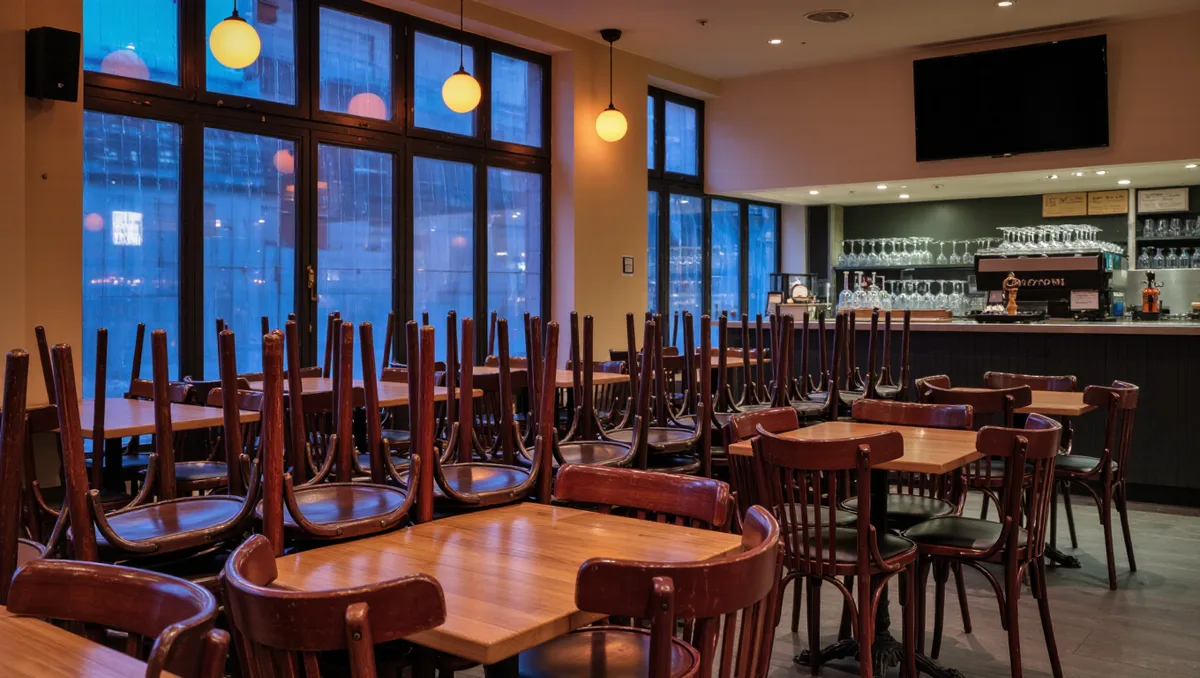
The room sets the pace before you say a word about wine. A wine bar in the West Village pours by the glass and has no reason to open your bottle. A BYO-friendly neighborhood spot on the Upper West Side will hand you a corkscrew and a smile. Corkage — the practice of bringing your own wine to a restaurant and paying a fee for the privilege — is legal in New York, and plenty of Manhattan kitchens allow it. Whether it goes well depends almost entirely on how you handle the ask.
The short answer: call ahead, ask directly, expect to pay a per-bottle fee, tip on the full experience, and never bring a bottle the restaurant already sells. Get those four things right and corkage is a welcome gesture instead of an imposition. Get them wrong and you will feel it in the room.
What is a corkage fee, exactly?
A corkage fee is what a restaurant charges to open and serve a bottle you brought yourself. You are paying for the labor and the lost sale: glassware, the sommelier's time, table space, and the margin the restaurant gives up by not selling you its own wine. The fee varies widely from one room to the next, so treat any specific number you hear as a starting point, not a rule. Some restaurants waive the fee entirely — often for wine club members, regulars, or on slower weeknights. Others decline corkage altogether, and that is their right.
One thing to understand up front: the fee is not a tip and it is not a tax. It is a service charge the house keeps. If you want the staff to feel the gesture, that lives in the tip, not the fee.
How do you ask a Manhattan restaurant for corkage?
Call, or email, before you book. This is the single move that separates a smooth evening from an awkward one. Ask a plain question: "Do you allow corkage, and what is the fee?" Get the answer from a person, not from a years-old forum post or a blog list that may be out of date. Policies change with new owners, new beverage directors, and new licenses.
Confirm three things when you call:
- The fee per bottle. Ask whether it changes with the day of the week or the size of your party.
- A bottle limit. Many rooms cap how many bottles a table may bring, especially on weekends.
- The overlap rule. Most restaurants will not open a bottle they already pour. Check the wine list online before you choose what to carry.
Book the reservation in your own name and mention the corkage again when you arrive. A quiet heads-up to the server — "we called about the bottle" — beats a bottle thumped onto the table unannounced.
What should you bring, and what should you leave at home?
Bring something the restaurant could not have poured for you. A bottle from a small producer, an older vintage with some age on it, a wine from a region the list ignores — these are the bottles that make a sommelier lean in rather than roll their eyes. The unwritten rule that every beverage director will tell you version of: do not carry in what is sitting on their shelf. If you must bring a widely available label, at least pick one the house does not stock.
Offer a taste to your server or the sommelier. This is old etiquette and it still lands well. It is not required, but it turns a transaction into a small moment of hospitality, and it costs you a pour. If the sommelier opens the bottle and finds it corked — smelling of damp cardboard rather than fruit — say so early. Most rooms will handle a faulty bottle graciously when you flag it before the table has drunk half of it. Readers following this should also see Pre-theater dinner, solved: how to eat well around the Broadway houses without missing curtain.
Leave the spirits at home. Corkage is a wine custom. Showing up with a bottle of whiskey reads as a dodge on the bar tab, not a gesture.
What do you tip on a corked bottle?
Tip on the meal as if you had bought the wine from the list. The staff carried the bottle, chilled it, opened it, and poured it all evening. The practical approach many diners use: calculate the standard gratuity on the total bill including the corkage fee, or add a little extra to acknowledge the bottle work. The exact amount is your call and there is no citywide formula — the principle is that the fee goes to the house and the tip goes to the people who served you.
If the restaurant waives the fee, tip as though it had not. The waiver is a gift of margin; passing a slice of it to the floor is how the gesture stays welcome next time.
When does a restaurant say no — and why?
Plenty of rooms decline corkage, and the reasons are usually sound. A serious wine list is part of the restaurant's identity and its economics; the bottle margins help keep the kitchen afloat. A small room with limited glassware and a tight pass may simply not have the hands. Some places only allow corkage on nights when the floor is quiet. And a few decline for the oldest reason in the book: a guest once abused the policy.
Take the no gracefully. Arguing with a host about a policy the house is entitled to set is the fastest way to be remembered for the wrong reason. If corkage matters to your evening — a birthday, an anniversary bottle you have been cellaring — ask about it before you choose the restaurant, not after. Some rooms that decline wine corkage for regular bottles will make an exception for a meaningful vintage; that is a conversation worth having by phone, politely, in advance.
What this means for your next reservation
Corkage works in Manhattan when it is treated as a courtesy running in two directions. You are asking a business to give up a sale; the restaurant is being asked to serve a bottle it did not choose. The mechanics are simple — call ahead, confirm the fee and any bottle limit, avoid label overlap, tip generously, offer a taste. The spirit is simpler still: bring a bottle worth opening, and behave like a guest the room wants back.
For more on how the city's dining economics work, see our guide to the math behind both ends of Manhattan dining, or dig into how happy hour discounts actually function. And if you are planning the rest of the evening around the bottle, our pre-theater dinner guide covers the blocks around the Broadway houses. We covered a connected angle in A $6 slice and a $300 tasting menu sit ten blocks apart: the math behind both ends of Manhattan dining.
Sources: forum.lowyat.net