The hardest tables in Manhattan are rarely won at the moment the booking window opens. They are won by people who understand how the reservation system actually works: when restaurants release inventory, which slots fill first, and what to do when the calendar shows nothing. Landing a prime-time table at a fully booked spot is a skill, not luck.
The core answer is simple. Book the moment the reservation window opens, aim for the least popular time slots, use every channel the restaurant offers, and treat the reservation itself as a commitment. Do those four things and most of the city's sought-after rooms become reachable, even without a connection at the host stand.
Dining in this city runs on scarcity. A small room with twenty tables and a city full of people who want one creates competition by design. Knowing the mechanics puts you ahead of the crowd that just refreshes the booking page at random.
When should you actually book?
Most restaurants release reservations on a rolling window: a set number of days ahead, often at a fixed time of day. The exact window varies by restaurant, so check the venue's own booking page or call the host stand and ask. That call takes two minutes and answers the single most important question in the process.
When the window opens, be ready. Have an account set up in advance, your party size chosen, and a payment card saved if the restaurant requires one to hold the table. Popular slots, especially weekend prime-time dinner, can disappear within minutes of release. Logging in early and knowing exactly what you want is the difference between a confirmation and a sold-out screen.
If you miss the drop, do not assume the table is gone. Cancellations happen constantly. Plans change, weather turns, someone gets sick. A reservation that looked impossible on Tuesday can be yours on Friday morning if you keep checking, or if you use a waitlist or notification tool where the booking platform offers one.
Which time slots are easiest to get?
Not all tables are equally contested. The hardest slots are predictable: Friday and Saturday between roughly the early and middle evening hours, and any holiday-adjacent weekend. Everything around that peak is softer.
- Early dinner. A table at the start of the evening service is often available when the mid-evening slots are long gone. You eat well and still make a show or a plan afterward.
- Late seating. The last seatings of the night go begging. Kitchens stay open until close, and a late table can feel like a different, calmer restaurant.
- Weeknights. Tuesday through Thursday are the quietest nights in most dining rooms. The same menu, the same kitchen, a fraction of the competition.
- Lunch. Many of the city's most booked dinner rooms have open lunch books. If the goal is the food and the room, midday is the easiest way in. The economics often favor you too, as our look at how lunch specials actually work explains.
Party size matters as much as time. A table for two is far easier to place than a table for six, because restaurants can slot pairs into gaps. If you are flexible, book the smaller group and celebrate separately, or call the restaurant directly about larger parties, which many handle outside the standard booking system.
What tools actually help?
Start with the booking platforms most Manhattan restaurants use. Set up profiles in advance, save your card details, and turn on notifications. Many platforms show cancellation patterns or offer a waitlist that pings you the moment a table opens. The waitlist is the single most underused tool in reservation hunting: join it even when the calendar looks fully blocked. For related coverage, see The lunch special is Manhattan's best deal and its most misunderstood menu: how the economics work.
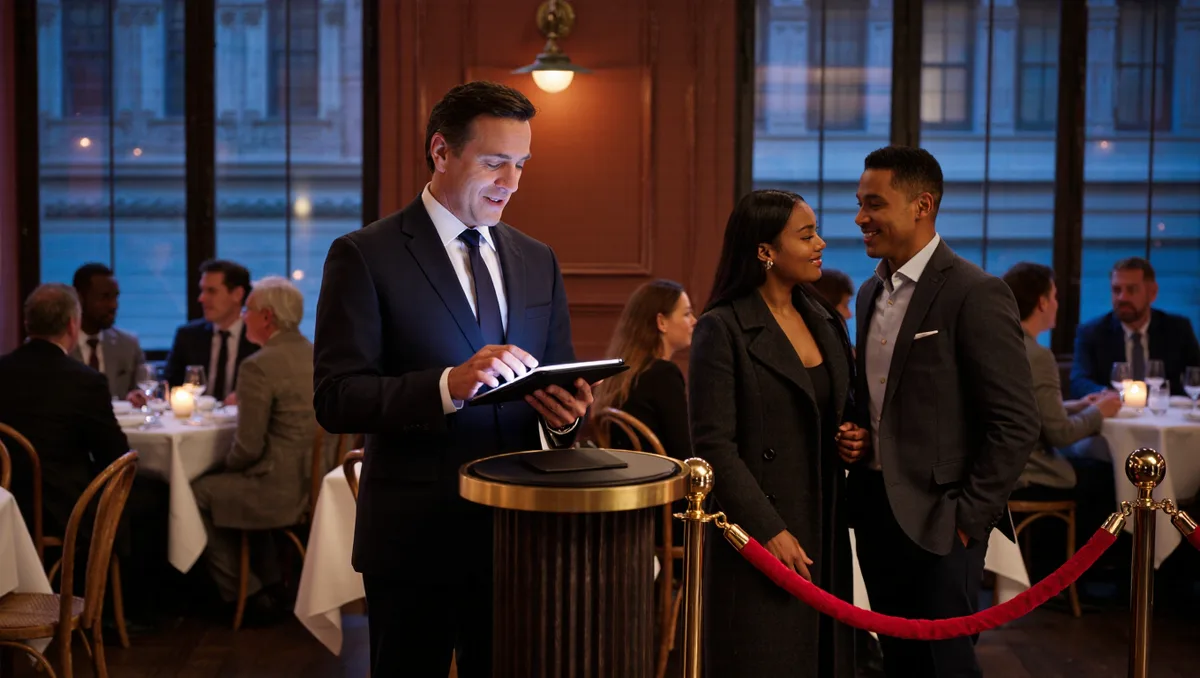
Then go direct. Some restaurants hold tables back from the platforms for phone reservations, regulars, or hotel concierges. Calling the restaurant during a quiet hour, typically mid-afternoon before dinner service, gets you a human who can tell you about cancellations, bar seating, or an upcoming release window. Be polite, be brief, and ask what they can actually offer.
The bar or counter is the classic fallback. Walk-in seats at the bar put you in the room with the same kitchen and often the same menu, no reservation needed. Arrive early or on a weeknight, expect to wait, and ask the host how the walk-in list works. Some rooms also hold community tables or counter seats that never appear online.
Finally, check the restaurant's own website and social accounts. Chefs and operators announce pop-ups, new seatings, and special events there first. A special event or an added service is often the easiest door into a room that is normally shut.
What is the etiquette once you have the table?
A hard-to-get reservation comes with obligations. Cancel as early as you can if your plans change, ideally well before the service, so the table can be released to someone on the waitlist. Many sought-after restaurants now hold reservations with a card and charge a fee for no-shows and late cancellations. That policy is printed on the booking page; read it before you commit.
Arrive on time. A late party compresses the whole evening for the kitchen and the servers, and some rooms will release your table after a short grace period. If you are running behind, call ahead. Hosts are far more forgiving to guests who communicate.
Be honest about your party size. Squeezing five people onto a four-top creates problems for the room and the people seated next to you. If your group grows, call and ask; restaurants would rather solve it in advance than be surprised at the door.
And do not ghost a restaurant because a better option appeared. The dining scene is small, hosts talk, and a pattern of no-shows follows you across booking platforms. The reservation system only works when people treat bookings as real commitments.
Practical steps: our analysis of what actually works
Put together, the playbook looks like this. Pick your restaurant and find its exact release window. Set up accounts and payment details before the drop. Book the moment the window opens, choosing an early, late, or midweek slot if you can. Join the waitlist immediately if the prime slots are gone. Call the restaurant directly for cancellations, bar seats, and large parties. Keep the reservation once you have it, and cancel early if you cannot use it.
None of this requires connections or insider status. It requires preparation and a little persistence. The city's best rooms reward the guests who show up on time, honor the booking, and know which doors are actually open. If your table lands near the theater district, our pre-theater dinner guide covers the timing around curtain, and if you end up bringing your own bottle instead, how corkage works in Manhattan walks through the ask, the fee, and the tip. This connects to our earlier piece, Pre-theater dinner, solved: how to eat well around the Broadway houses without missing curtain.
What to do when nothing works
Sometimes the table stays out of reach, and that is fine. Manhattan rewards flexibility. The same chef often runs a more casual room nearby, or a sister concept with an easier book. A neighborhood one block over may offer a similar meal without the waitlist. Our guide to eating Chinatown is a good reminder that some of the city's best food has no reservation system at all.
The evidence here is mostly structural, not statistical: scarcity, cancellation patterns, and booking mechanics are stable features of how the city dines. What remains unknown is any specific restaurant's policy, which is why the first call should always be to the venue itself. Ask the host stand. It remains the most reliable reservation tool in Manhattan.
Sources: en.wikipedia.org · amazon.com