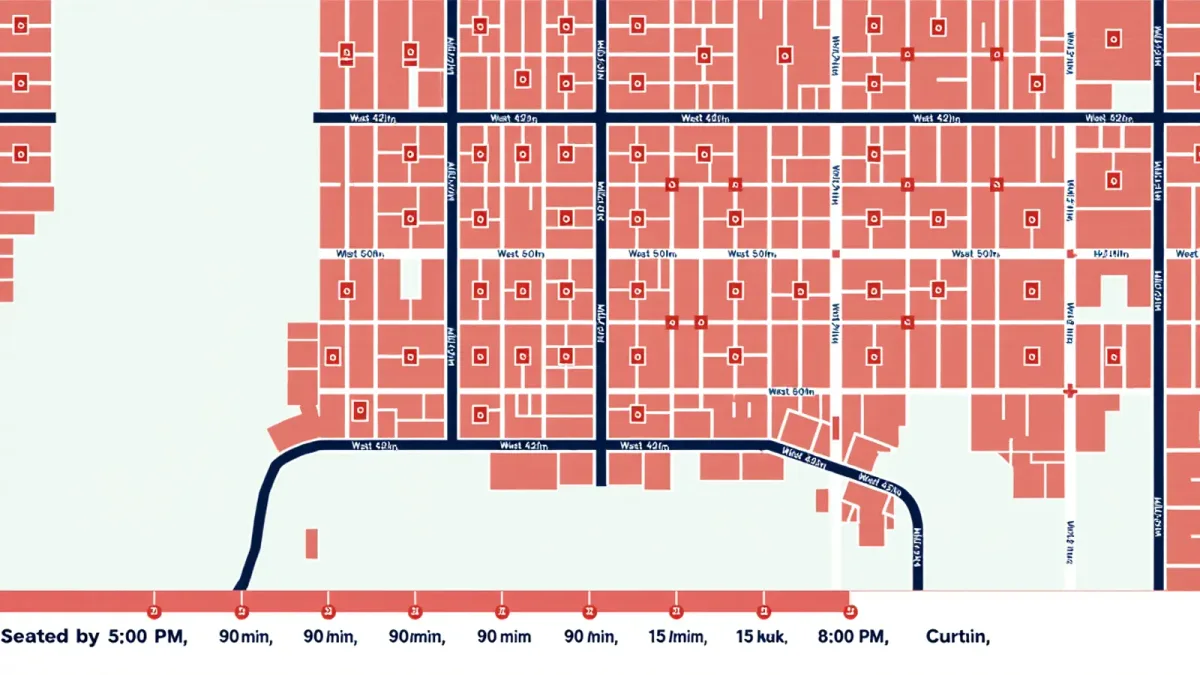
Broadway performances run at 7 or 8 p.m. most weeknights, with matinees at 2, and that single scheduling fact shapes every kitchen between West 42nd and West 50th streets: to eat before curtain you need to be seated by 5:30 for an 8 p.m. show, or 5 p.m. for the 7. The Theater District's pre-theater menu — a fixed-price, time-limited dinner format — exists precisely for that window, and as of January 2026 roughly two dozen kitchens around the Broadway houses still post one, most in the $35 to $75 range before tax and tip. This guide explains how the format works, where it works best, and how to order so the check lands and the coat check clears with time to spare.
Ground rules: this is a sourced explainer, not a review. Menu details and prices below come from operators' posted menus and are dated to January 2026; menus change seasonally, so treat any named dish as a snapshot.
What is a pre-theater menu, exactly?
A pre-theater menu is a limited selection — typically two or three courses, sometimes with a glass of wine — offered only during the early window, usually 5 to 6:30 p.m., at a fixed price. The economics run in the diner's favor: kitchens fill seats that would otherwise sit empty between lunch and the late seating, which is why the same dining room can charge $60 for the full menu and $45 for the early fixed price. The trade-off is the clock. Service is paced to push you out the door by curtain; that is the point, and a good pre-theater kitchen executes it like a choreography.
How much time should you actually budget?
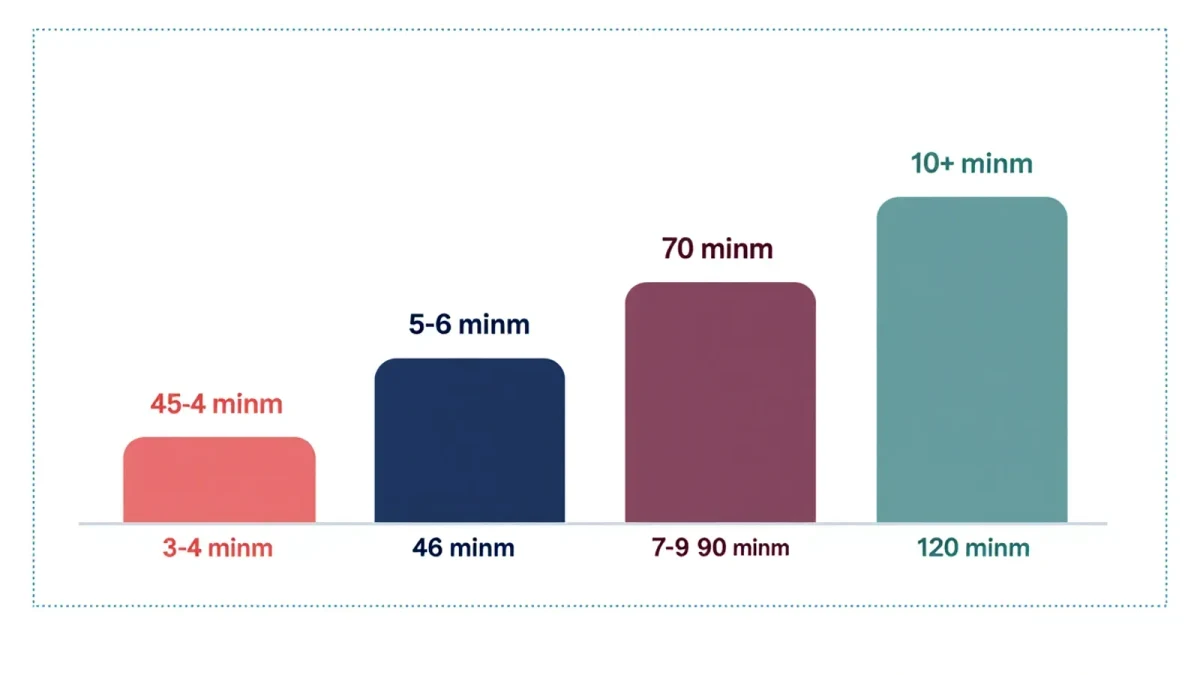
Count backward from curtain, not from seating: 15 minutes to walk from the restaurant to the theater — and in this district nothing is more than a ten-minute walk, most under five — plus 20 minutes to coat-check and settle, plus 75 to 90 minutes for a two-course meal. That puts the last viable seating for an 8 p.m. curtain at about 6 p.m., and for a 7 p.m. curtain at about 5 p.m. for a two-course order only. If you want three courses with dessert, book at 5 for the late show.
Where the format works best around the houses
The strongest pre-theater kitchens cluster on Restaurant Row — West 46th Street between Eighth and Ninth avenues — where the format has been the business model since the mid-20th century. Becco, Lidia Bastianich's Italian at 355 West 46th Street, has long run the district's most famous fixed-price play: a pasta tasting where three of the kitchen's pastas arrive in unlimited portions, per the restaurant's posted menu as of January 2026. Joe Allen at 326 West 46th Street, open since 1966, serves the classic three-course fixed price in a room built for theater people; the pre-theater window moves fast by design. Past Ninth Avenue the plays are the old steakhouse rooms, where the fixed prices are real but the portions are theater-sized, not appetite-sized.
The counter and raw-bar play
Not every pre-show meal needs a table. The district's raw bars and counter seats — around Ninth Avenue and in the ground floors of the Eighth Avenue hotel strip — run à la carte with fast ticket times: a half dozen oysters and a plate take 25 minutes start to finish at a counter with no reservation needed. For a 7 p.m. curtain, this is the safest format in the district; you are never hostage to a paced three-course service.
Matinees: the harder problem
A 2 p.m. curtain inverts the math: lunch service ends too late to sit at 1, and post-show dinner starts too early to book at 4:30 in most kitchens. The workable options are the ones that serve continuously from noon to 10 p.m. — the hotel dining rooms along Eighth Avenue and the coffee-shop-style grills near Times Square, which plate a real meal at 3:30 without ceremony. Ask one question when booking: do you serve the full menu between lunch and dinner? Kitchens that switch to a limited bridge menu at 3 will not rebuild a proper plate at 4:40.
How to avoid the district's tourist traps
Three tells. One: menus with photographs of the food, the clearest marker of kitchens selling location rather than dinner. Two: hosts soliciting on the sidewalk — the better kitchens around the houses fill their seats weeks out. Three: menus that bury prices for supplements, a fixed-price dinner that turns out to be per-person plus mandatory extras. The Department of Health posts inspection histories for every address in the district, worth checking alongside the menu. And a rule that holds across the district: the block, not the brand, predicts the meal — West 46th Street kitchens live or die on repeat theater trade, and repeat trade forgives nothing.
Booking strategy for peak weeks
December holidays and the spring opening season compress the district's tables hardest; the Christmas-to-New-Year run is the single busiest stretch, when 5:30 seatings book out weeks in advance. Off-peak — late January through February, per the district's own rhythm — walk-ins clear at even the named rooms. Reserve for the early seating online, confirm the kitchen honors the fixed price on your date, and remember the district's unwritten rule: the server will get you to curtain, but only if you say the curtain time when you sit down.