Between roughly 4 and 7 p.m. on weekdays, Manhattan runs its most rational drink prices: $7 to $9 glasses of wine that cost $16 at 8, $2-to-$3 oysters at the raw bars, and bar menus that price snacks at half the dining-room rate. Happy hour is the bar business's version of the lunch special — filling seats and taps during the dead window before dinner — and reading it well turns the city's most expensive mealtime drink into a working dinner. As of June 2026 the format is thriving across the island, with the deepest deals at the raw bars and the wine bars of the midtown edges. This guide explains the mechanics and maps the formats.
A boundary note: this site publishes information, not drinking advice — order the food side of the menu, plan the ride home, and read the fine print below before you go.
Why does happy hour exist?
The same fixed-cost logic that prices every other Manhattan discount. A bar's rent, licenses, and staff run all day; taps and seats earn nothing between lunch and the after-work rush. The 4-to-7 discount converts dead capacity into volume, and the volume subsidizes the margin: drink discounts are engineered to start a tab that continues at full price, and the food specials — the oysters, the bar snacks — are frequently the better deal than the drinks. The state shapes the edges: New York's liquor authority restricts unlimited-drink promotions, per the authority's posted guidance on happy hour rules, which is why the city's deals run on pricing rather than open-bar formats.
The raw-bar play: oysters as dinner
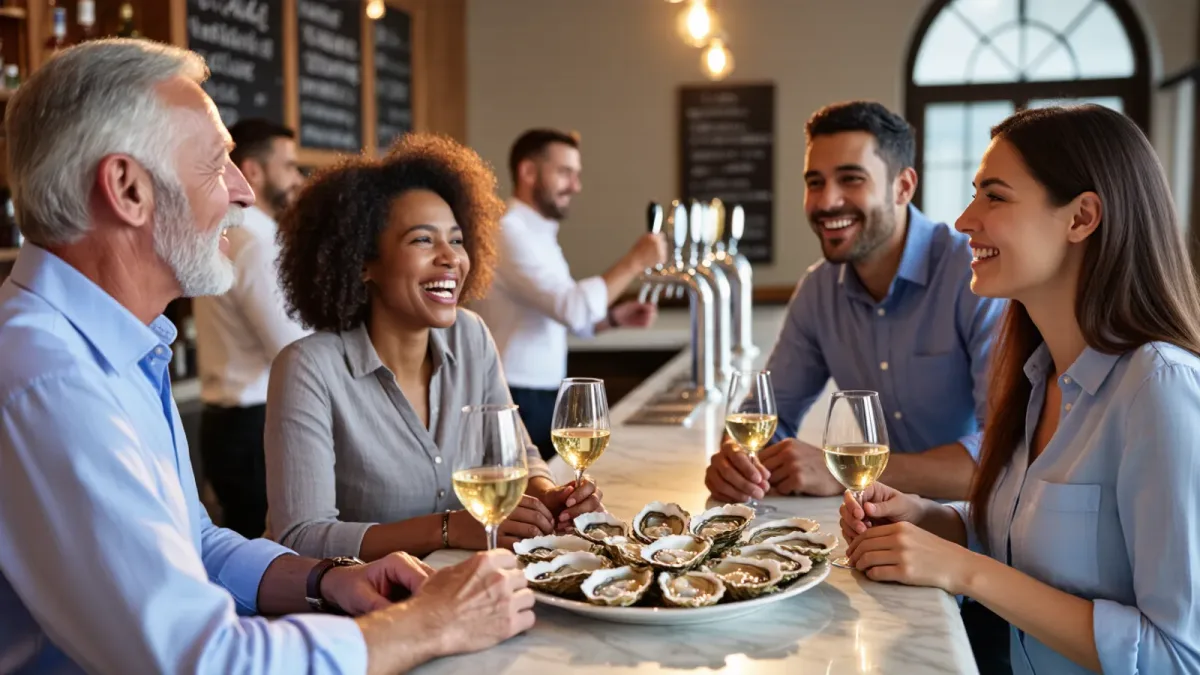
The single best happy-hour value on the island is the dollar-or-near-dollar oyster: raw bars across Manhattan — the Grand Central Oyster Bar's lower level among the oldest, and the newer counters through Midtown, the West Village, and the Lower East Side — run weekday windows where a half dozen lands in the $12-to-$18 range, roughly half the evening price. Two mechanics matter. The oysters are typically the house farmed variety, not the market list's specials, and the clock matters: the window closes at 6:30 or 7 sharp, and the line at 6:40 is paying dinner prices for the same stool.
Wine bars and the midtown edges
The wine-bar tier runs the format with the widest gap between hours: a glass poured at 5 for $8 that becomes a $16 glass at 8 is the standard spread, per posted menus across the Midtown edges and the Village. The bar-bite menus attached to these deals — toasts, tinned fish, crostini — are priced like the wine, and the working dinner is two glasses and three plates in the $30-to-$40 range before tip. The blocks that do this best are the ones with office overflow: the east 50s, the Hudson Yards edges, and the Flatiron lunch corridor converting to its 5 p.m. self.
The neighborhood formats worth knowing
Beyond the raw bars and wine bars, three neighborhood formats run their own versions of the window. The izakaya-style bars of the East Village and Midtown East discount sake and highballs with small plates attached, making the food side of the deal the stronger half. The old-man bars of the side streets — the shot-and-a-beer rooms that predate the discount era — simply price like it is always happy hour, and their 5 p.m. regulars are the island's most efficient drinkers precisely because there is nothing to game. And the brewery taprooms and beer gardens of the outer edges pour flights at happy-hour rates that the island's center never sees, trading convenience for space and picnic-table pacing. Each format runs on the same 4-to-7 clock, but each rewards a different order.
Where the format is weakest
Happy hour fails predictably in three places. The hotel roofs, which discount the view rather than the pour — the 5 p.m. cocktail there runs within a dollar of the 10 p.m. one. The themed bars of the Times Square grid, where the discount prices a pour the neighborhood never sees at list price. And the tasting-room restaurants, whose bar programs price to the dining room rather than to the street. The test is the same at every door: check whether the deal appears on a printed menu with hours, or only in the host's patter.
The fine print that matters
Four rules from the mechanics above. Deals run on weekdays almost exclusively — weekends rarely discount, because there is no dead window to fill. The clock is enforced to the minute, and the honest bars print the window; the ones that don't are charging dinner prices with a story. New York's rules against unlimited-drink promotions mean a genuinely cheap bar is selling you specific pours at specific prices, not an all-you-can-drink wristband — treat a wristband offer as a fact about the venue. And the state's posted happy hour guidance is public per the liquor authority, worth a skim if you are the one organizing the group: the deals that comply are the ones that last.