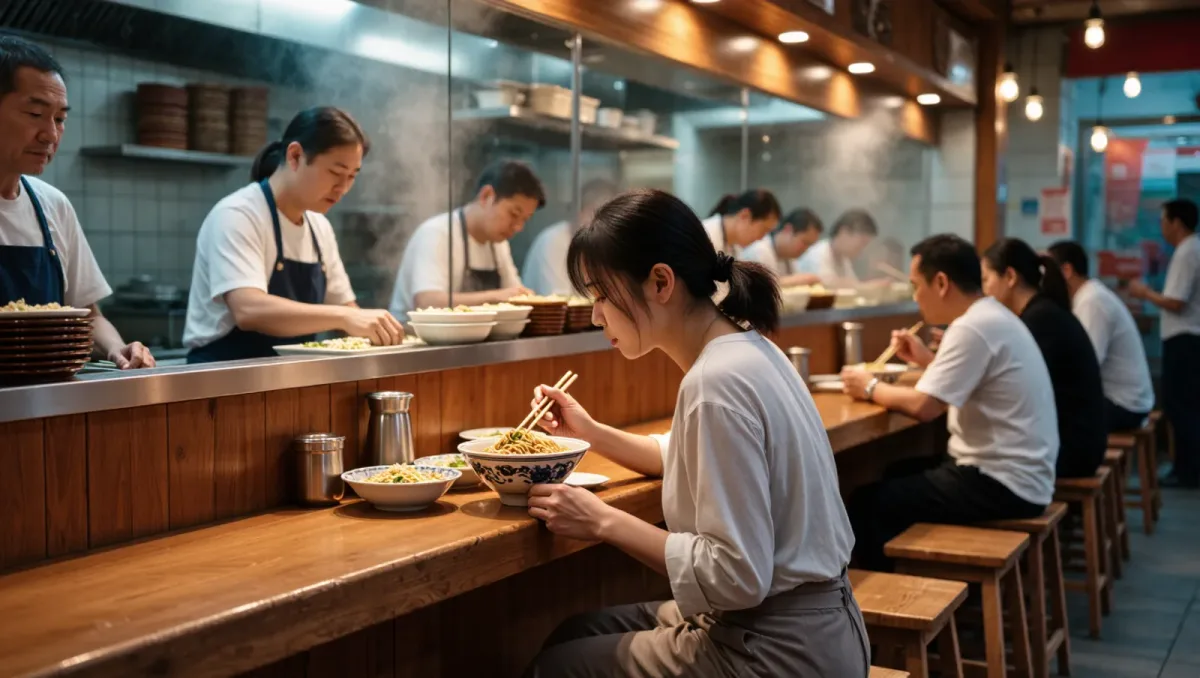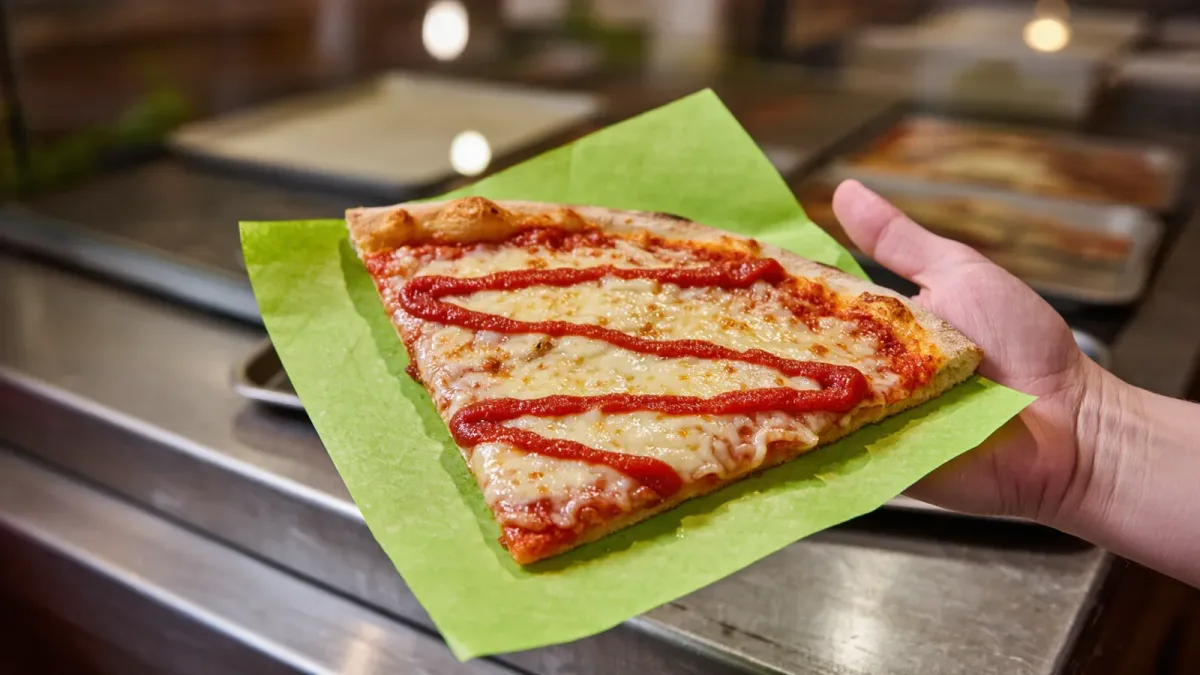
On any given Friday in Manhattan you can eat a full dinner for $8 at a pizza counter on Bleecker Street or spend $295 on a tasting menu a subway stop away — and both are working restaurants with honest economics. The gap is not mostly about food cost. Across the industry, ingredients typically account for roughly 28 to 32 percent of a restaurant's sales, per standard restaurant accounting benchmarks, which means the pizza slice and the tasting menu are closer cousins than their prices suggest. What separates them is labor time, seat count, and the rent on the room. This explainer walks through both ends of the price scale as of early 2026, with the numbers each side runs on.
A caveat before the math: this site publishes information, not dining advice, and figures below are industry-wide benchmarks rather than any single restaurant's books, which no operator shares publicly.
What does a $6 slice actually pay for?
The slice shop's model is volume against time. A counter that moves 500 slices on a Friday has ingredient costs measured in pennies per unit — dough, sauce, and low-moisture mozzarella run roughly $1 to $1.50 of cost per large slice before toppings, per standard pizzeria cost breakdowns. Everything else is fixed: the rent, the gas for the deck oven, the two or three people on a shift who can serve a customer in under 90 seconds. The slice survives in Manhattan not because margins are fat but because the throughput is enormous. When a slice shop fails, it is almost always the lease, not the sauce — the same lease math that has been reshaping Manhattan's cheap eats for a decade.
And what does a $295 tasting menu buy?
A luxury tasting menu of eight to twelve courses occupies two to two and a half hours of a diner's seat, and the labor-to-guest ratio is the reverse of the slice shop's: where a counter serves hundreds per shift with a crew of three, a fine-dining room can field a brigade of 30 or more for 40 covers. Ingredient cost per plate runs higher — luxury proteins, produce flown to spec — but the dominant costs are labor and the room itself. Industry benchmarking consistently puts prime labor in the low-to-mid 30s as a percentage of sales at full-service restaurants, and fine dining runs above the benchmark because of the size of the brigade and the length of service. The $295 is not the price of food; it is the price of a choreography.
Why rent decides both
Manhattan ground-floor retail rent is the variable that flattens everything else. Corridor rents in prime Lower Manhattan and along the crosstown food streets have priced out whole categories of cheap eats; a counter selling $6 slices needs steady volume just to clear a lease that a 40-seat tasting room clears with two seatings. That is why the cheap end migrates — to food halls, to corners just off the prime corridors, to counters with no seating — while the expensive end holds its ground. Between them sits the vast middle, where the $25-to-$50 entree restaurants absorb rent pressure through shorter menus, smaller staffs, and wine markups.
How to eat well at the bottom of the scale
Three working rules. Buy where the product moves: a slice from a rack that empties every 20 minutes beats a fresh-baked slice at an empty counter, because turnover, not the oven, is the freshness variable. Order the menu's center of gravity: at a cheap counter the house specialty is priced to move and everything else subsidizes it. And time it — many counters discount or bake to the lunch and late-night rushes, so the best slice of the day comes out at 12:30 and again around 11 p.m.
How to get value at the top of the scale
Tasting menus discount at the edges of the week. The same kitchens that charge full price Friday and Saturday run cheaper formats midweek: bar seatings, shorter five-course versions, and lunch versions of the dinner menu priced 30 to 40 percent lower, a pattern visible across Manhattan's luxury tier in recent seasons. Booking the early seat or the bar counter is the single largest saving available; the courses are the same, the room is a seat closer to the kitchen, and the check drops by the price of another meal.
The service-included question
One more difference between the ends of the scale: how the bill is built. A slice counter takes your money at the register and the transaction ends there, while tasting-menu rooms increasingly add a service charge or administrative fee of 18 to 20 percent to the fixed price — a structure that has spread across the luxury tier in recent seasons and shifts the comparison math. When you price a tasting menu against ten slices, read the fine print on the check first: the per-person figure on the menu is sometimes not the number that leaves your account.
The middle path most New Yorkers actually eat
The honest answer to the $6-versus-$295 question is that most of the city lives between them, at the counters and neighborhood rooms where a plate runs $18 to $32 and the economics still work because the room is small, the menu is short, and the staff is five people, not thirty. That middle band is where new Manhattan restaurants cluster, and where the lease-math pressure bites hardest. Both ends of the scale are stable for opposite reasons; the middle, per the city's closing announcements in recent years, is where the churn lives.