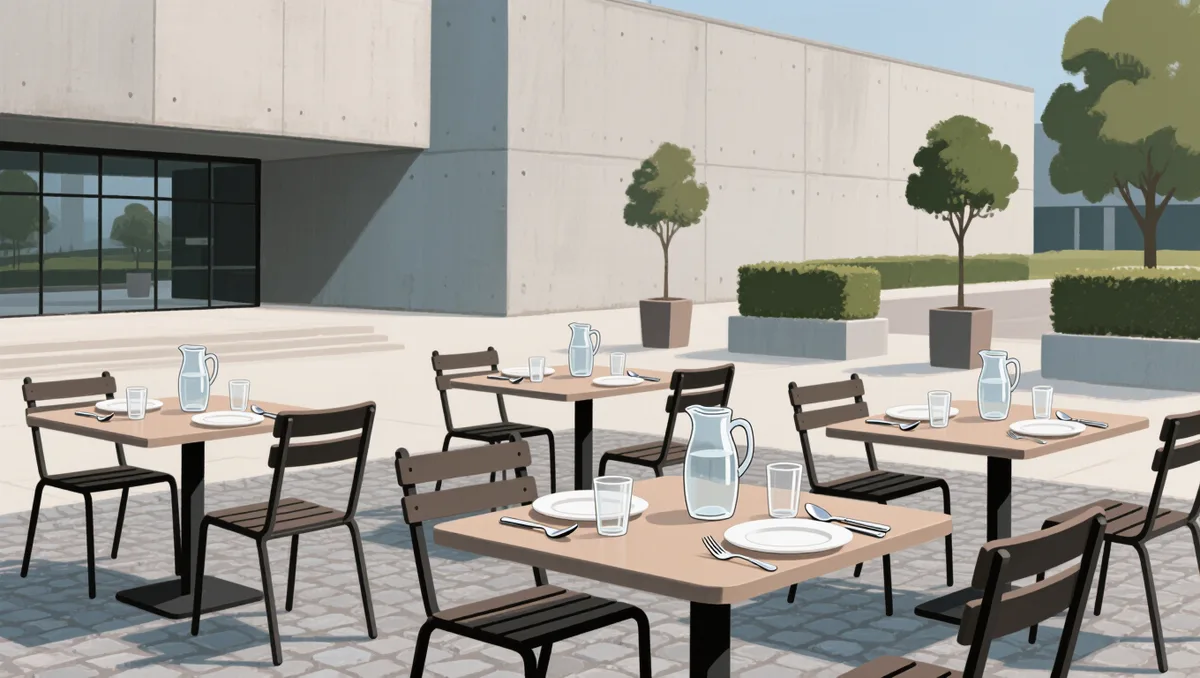
A dining room set earns its keep the way a restaurant kitchen earns its keep: constant use, spills, heat, and people leaning on it. That is why the table matters more than anything else in the room. A good one lasts decades. A bad one starts to swell at the seams within a few holiday seasons.
The short answer on value: spend on the table, be practical about the chairs, and treat the hutch or sideboard as optional. A bundled set often wins on price and on finish matching, but only if the table itself is well built. A beautiful bundle built around a weak table is a bad deal dressed up nicely.
This guide walks through how sets are actually constructed, what veneers do and don't tell you, and how to decide between buying the box and buying separately. For more on how we cover the dining world, see the rest of our dining coverage.
What actually makes a dining table well built?
Ignore the marketing words first. "Solid wood" on a tag can mean solid wood legs with a paper-thin wood-look surface over particleboard on top. The label is legal. It is not a construction report.
Look instead at joinery, which is simply how the pieces connect. The strongest tables use mortise-and-tenon joints, where a tongue of one board slots into a matching hole in another, or true dovetails on drawers. Weaker tables rely on screws, staples, and glue blocks that work loose as the wood expands and contracts with the seasons. If a store sample wobbles, walk away. Floor models get handled hard, so they show the truth early.
Check the apron, the skirt of wood that connects the legs under the tabletop. A deep, sturdy apron keeps the table rigid when someone leans on an edge. Also look at how the top is attached. Small wooden clips or figure-eight fasteners let the top move slightly as humidity changes. Tops bolted rigidly to their bases tend to crack over time, because wood that cannot move will find another way to move.
Veneers: cheap trick or smart design?
Veneer has a reputation problem it mostly doesn't deserve. A veneer is a thin slice of real wood glued over a core. Fine furniture has used veneer for centuries, because it lets makers use rare, figured, or unstable woods in thin, stable layers. A well-made veneer over a solid core can outlast a poorly milled solid-wood top.
The difference is what's underneath. Veneer over plywood or solid lumber is a legitimate construction choice. Veneer over particleboard or medium-density fiberboard is where trouble starts. Those cores crumble when water gets in, which is why the edge of a cheap table swells after one forgotten coaster. Run your hand along the edges. A solid-wood or plywood edge feels hard and crisp. A swollen, chipping, or paper-smooth edge tells you what the core is made of.
One more tell: look at the underside of the table. Quality makers finish the bottom of a top, because finishing both sides keeps moisture from pulling through unevenly. An unfinished, rough underside on a supposedly premium table is a quiet warning.
When does a bundled set beat buying separately?
Bundles win in three situations. First, when you want everything to match, because getting a hutch, table, and chairs from different makers to share a finish is genuinely hard. Second, when a retailer discounts the set meaningfully below the sum of its parts, which happens often at the end of a furniture season. Third, when you need everything at once, such as furnishing a first apartment or a new house, and buying piece by piece would leave you eating on a folding table for a year.
Bundles lose when the discount comes from cheapening the table. Furniture makers hit a price point by thinning the apron, swapping solid wood for veneer-over-particleboard, and simplifying the joinery. The savings are real, but so is the trade-off.
Our analysis: price the table alone first. If the full set costs only a little more than the table by itself, the bundle is usually worth it, because chairs and storage pieces are being thrown in nearly free. If the set costs a lot more than the table alone, ask whether you actually want those specific chairs, or whether you'd rather choose your own.
How should you think about chairs?
Chairs take more abuse than tables and get replaced more often, which changes the math. A chair's weak points are the joints where the legs meet the seat and where the back meets the seat. Corner blocks and threaded bolts that can be retightened beat glue alone. Sit in the floor model. Rock side to side. A chair that creaks in the showroom will creak at your dinner party.
Chairs are also where personal taste should win over set-matching. Matching chairs look formal and calm. Mixed chairs around one table look collected and can be updated one at a time as budgets allow. Both are legitimate. We have a separate guide on How to Pick Dining Chairs You'll Love for Years that goes deeper on seat height, materials, and wear.
One practical note: check seat height against the table before you commit to anything, whether bundled or separate. Standard tables and standard chairs are made to pair, but a counter-height table with standard chairs is a common and awkward mistake.
What this means for your budget
Think of a dining set the way we think about a restaurant bill: the headline price matters less than what you're actually getting for it. A modest set with honest joinery and a plywood-cored veneer top will outlive a flashy set with a crumbling core. The same logic applies across the dining world, from furniture to food, as we've argued in our piece on the math behind both ends of Manhattan dining: price signals quality, but it doesn't guarantee it. For related coverage, see A $6 slice and a $300 tasting menu sit ten blocks apart: the math behind both ends of Manhattan dining.
Before you buy, do four things in the store. Tip the table gently to check for wobble. Open every drawer and look for dovetails. Run a hand along every edge to feel for swelling or chipping. And ask what the core material is under any veneer, in plain words, until you get a plain answer.
What remains unknown is how any specific brand's current production compares to its older stock, because makers change factories and materials without changing the model name. That is why the hands-on checks above matter more than the brochure. Spend on the table. Be honest about what the veneer is hiding. And only bundle when the bundle's table would be your choice on its own.
Sources: restaurantji.com