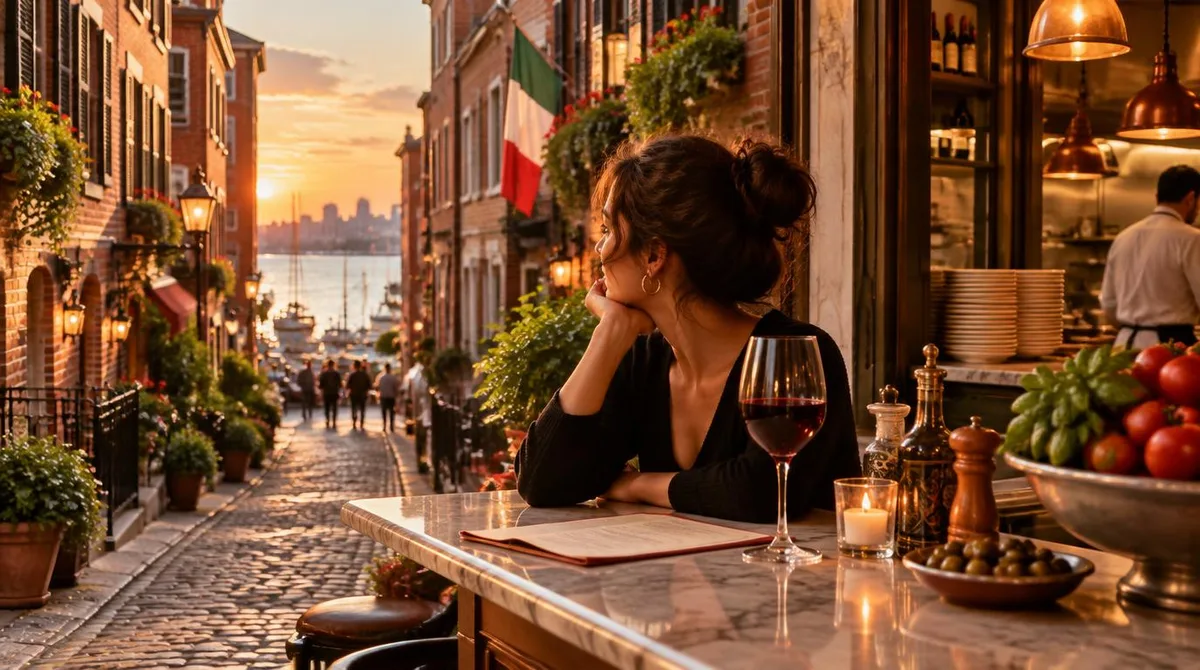
The best dining neighborhoods in Boston right now are the North End for Italian tradition, Chinatown for the city's densest block of Asian kitchens, the Seaport for newer, bigger rooms, and the smaller strips — East Boston, Jamaica Plain, Union Square in nearby Somerville — where locals eat on a Tuesday. That is the short answer. The longer answer depends on what you want from a meal: a reservationless walk-in, a special-occasion room, or a counter where the same regulars show up every week.
This is a criteria-first guide, not a ranking. Boston's dining map changes season by season, and any list that promises "the best" without saying how it judged deserves suspicion. So the criteria here are simple: concentration of good kitchens within walking distance, a mix of price points, and a reason to keep eating there after the first visit. Neighborhood names and general character come from durable, widely known knowledge of the city's layout; no specific opening dates, prices, or restaurant-by-restaurant claims appear below, because those need dated confirmation.
What makes a Boston neighborhood worth eating in?
Three things, and they are the same three things that make any city neighborhood worth eating in. First, density: enough kitchens close together that a change of plan — a long wait, a closed kitchen — still lands you somewhere good. Second, range: a strip that supports both a splurge and a cheap counter is healthier than one that supports only one. Third, turnover you can read: a neighborhood where openings and closings are visible on the street tells you the dining economy is live, not preserved in amber.
It is worth noting how other cities frame the same question. According to Visit Jacksonville, the city's tourism board organizes its dining roundup by neighborhood — Arlington, Atlantic Beach, Downtown, Mandarin — and lists signature dishes area by area, from arancini at an Italian spot to Mayport shrimp nachos at a dockside fish camp. That structure, dishes anchored to blocks, is the same logic a good Boston neighborhood guide should follow. The block matters as much as the plate.
Is the North End still the city's Italian anchor?
Yes, with a qualifier. The North End remains Boston's most famous dining district, a compact grid of narrow streets where Italian-American kitchens, pastry counters, and espresso bars have operated for generations. Its strengths are consistency and atmosphere: red sauce done properly, cannoli lines that move fast, and a room density you can walk end to end in twenty minutes.
The qualifier is that fame changes the room. Weekend evenings draw heavy visitor traffic, and the walk-in experience suffers for it. Locals who eat there regularly tend to go on weeknights or treat the North End as a dessert-and-espresso stop rather than a full dinner destination. If you want the neighborhood at its best, that timing difference is the whole game.
Why does Chinatown punch above its size?
Because of compression. Boston's Chinatown sits on a small set of blocks near the city's core, and that compression forces variety: regional Chinese kitchens, Vietnamese noodle shops, hot pot rooms, and bakeries stacked within a few minutes' walk of each other. For a diner, that means one street can deliver three different cuisines and three different price points in a single evening.
This is the same pattern that makes Manhattan's Chinatown and Curry Hill work as dining districts, a dynamic we cover in How to eat Chinatown and in Curry Hill, mapped: a neighborhood earns its reputation when a cuisine cluster gets dense enough that the kitchens compete for the same regulars. Competition keeps quality up and prices honest. Boston's Chinatown runs on that same engine.
What is the Seaport actually like to eat in?
Newer, larger, and more expensive — that is the honest summary. The Seaport's dining stock skews toward big, designed rooms built in the district's recent development wave, many with waterfront sightlines and kitchens that can handle volume. It is the neighborhood for a planned evening: a reservation made ahead, a group that wants a scene, a meal where the room is part of the point.
What it generally lacks is the cheap counter and the walk-in bar seat that make older neighborhoods flexible. Our analysis: treat the Seaport as a destination neighborhood, not a grazing one. You go there for a specific room and a plan. The grazing impulse belongs elsewhere.
Where do Bostonians eat when they are not downtown?
In the outer neighborhoods, and this is where the local-only reputations live. East Boston's dining strip has built a strong following for its mix of Latin American kitchens and its proximity to the waterfront. Jamaica Plain and the surrounding stretch of Roxbury and Somerville — Union Square especially, as its development has accelerated — carry the neighborhood-trio profile: a good bakery, a solid mid-price bistro, and a late counter, all within a few blocks.
The trade-off is access. These strips require a longer trip from downtown, and hours can be narrower than the big districts. But the flip side is value and ease: shorter waits, more walk-ins, and rooms that assume you live nearby rather than that you are checking off a list. If the question is where locals actually eat on an ordinary weeknight, the honest answer is closer to these strips than to the famous districts.
What this means for planning a Boston eating trip
Match the neighborhood to the meal, not the other way around. A special-occasion dinner belongs in the Seaport or a booked North End room on a weeknight. A grazing evening with no plan belongs in Chinatown. A cheap, satisfying night with short waits belongs in East Boston, Jamaica Plain, or Union Square. And if you are the kind of diner who plans around reservations rather than neighborhoods, the mechanics of scoring a hard-to-book table are the same in every city — see How to Book Hard-to-Get Manhattan Reservations for the playbook, which translates directly.
Two practical habits travel well. Check hours before you cross the city; neighborhood strips keep neighborhood hours. And build each evening around one anchor meal rather than three, because Boston's districts are compact enough that a single good choice leaves room for a bakery or a bar afterward. For the broader service-and-price questions that follow any city meal, our Dining section covers the whole range, from how corkage works to the math behind both ends of a city's price spectrum.
What the evidence here establishes is structure, not a verdict on any single kitchen. Which specific restaurants make each neighborhood worth the trip changes constantly, and those claims need dated, confirmed reporting before they print. What remains durable is the map: dense blocks, mixed price points, and the timing habits that separate a tourist meal from a local one.