A chef decides on Tuesday that Friday's menu needs yuzu kosho, baby fennel, and a specific dry-aged duck. None of it sits in the restaurant's walk-in. All of it arrives anyway, chilled and labeled, before the morning prep list is posted. The reason is a supply chain most diners never see: the specialty distributor, the warehouse, and the delivery truck that moves a farm's harvest into a fine-dining kitchen in a day or two.
This article walks that chain from end to end. Who buys what, how a warehouse sorts thousands of orders overnight, why the delivery window matters more than the price, and where the system breaks. It is written for the curious diner and the cook weighing a kitchen job, because understanding the supply side explains a lot about what appears — and what never appears — on a menu. We covered a connected angle in How to become a sommelier in New York: the exams, the floors, and what the job actually pays.
It is also a career question. Buying and receiving is a real kitchen discipline, and cooks who master it move up faster than the ones who only master the line. The path from dishwasher to chef de cuisine runs through ordering at least once, usually early.
What does a specialty distributor actually do?
A specialty distributor is a wholesaler that stocks what broadline distributors do not: microgreens, foraged mushrooms, imported vinegars, whole animal proteins butchered to spec, obscure citrus, heirloom grains. A broadline house is built on volume and staples. A specialty house is built on rarity, freshness, and relationships. Many fine-dining kitchens use both — broadline for flour, oil, and dairy, specialty for the ingredients that define the menu.
The distributor's core job is aggregation. A single farm cannot sell forty pounds of pea tendrils to forty restaurants. The distributor buys a pallet from the farm, breaks it down in the warehouse, and sells small lots to many kitchens. The restaurant gets a workable quantity. The farm gets one invoice instead of forty. Both sides pay a margin for that service, and the margin is what keeps the whole chain alive.
There is a second job that matters just as much: information. A good specialty rep tells a chef what is coming into season, what a frost did to next week's lettuce, and what a substitute might be when the ordered item shows up short. That knowledge is part of what the kitchen is really paying for.
How does an ingredient travel from farm to kitchen?
The chain has a handful of links, and each one adds time and cost.
- The farm or producer. Small farms sell through farmers markets, CSA programs, or wholesale. Wholesale is the volume channel, and it usually pays the farm less per pound than direct retail — the trade-off is scale and predictability.
- The buyer or broker. Some distributors buy direct from growers they know. Others work through regional produce terminals or brokers who consolidate smaller growers. The fewer links here, the fresher the product and the clearer the story behind it.
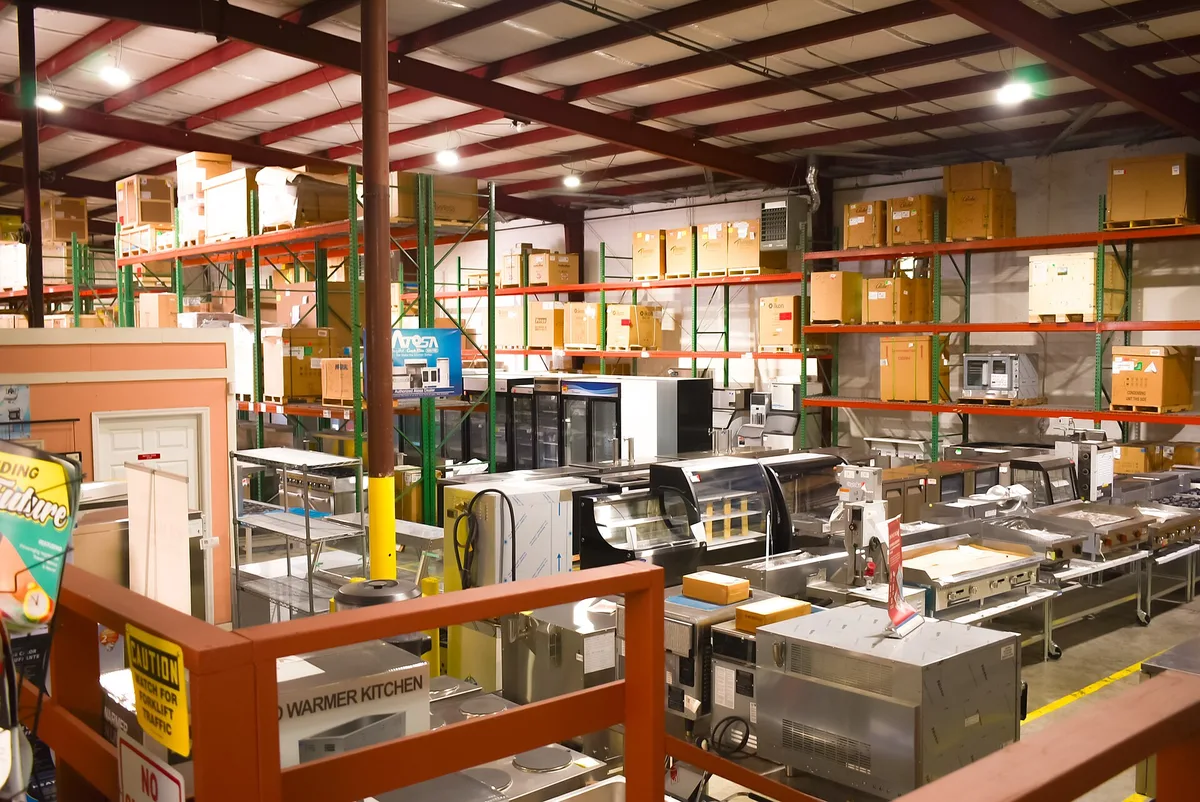
- The warehouse. Deliveries arrive on receiving docks, get checked against purchase orders, and move into temperature zones: refrigerated rooms for produce and dairy, freezers for proteins, dry storage for grains and shelf-stable goods. Order picking happens in a narrow overnight window, which is why the warehouse runs on night shifts most customers never think about.
- The route. Trucks leave before dawn on multi-stop routes through the city. A Manhattan route might hit a dozen kitchens between four and ten in the morning. Late deliveries ripple through the whole day's prep.
- The receiving cook. Someone at the restaurant checks every case against the invoice — weight, quality, temperature. Rejecting a bad case is part of the job, and a kitchen that never rejects anything is not checking anything.
Cold chain is the quiet hero of the whole story. From harvest to walk-in, temperature-sensitive ingredients are supposed to stay within a safe range the entire way. Every handoff is a chance for that to slip, which is why kitchens care about their distributor's trucks and coolers as much as about the product itself.
Why does the ordering deadline matter so much?
Specialty ordering runs on cutoffs. A chef typically places orders for the next day by a fixed hour — often late afternoon or early evening. Miss the cutoff and the item waits a full cycle, or arrives through a costly special run. That is why menu changes at fine-dining restaurants tend to happen on a rhythm tied to the distributor's calendar, not the chef's whim.
Deadlines also explain a lot of menu reality. If a rare ingredient is short, the dish changes or comes off. Diners sometimes read that as indecision. It is usually just the supply chain speaking: the truck came short, the rep flagged it, and the kitchen adjusted. A kitchen that preps for a 200-cover Friday is planning around what actually arrived, not what was ordered.
What this means for menus and prices
Our analysis: the supply chain is a hidden author of the menu. Ingredients that travel well, store well, and buy in useful lots show up constantly. Ingredients that bruise, spoil fast, or come in quantities a single kitchen cannot use show up rarely, or only at restaurants with the volume to justify them. When a dish costs more than expected, the price often reflects a short lot, a special delivery, or a producer who can only sell small — not simply a markup.
It also explains seasonality on menus in a practical way. A chef can want spring garlic in January, but the supply chain answers with what the farms and warehouses can actually deliver that week. The best chefs treat the distributor as a collaborator in the menu, not a vendor. The weaker ones treat it as a vending machine and eat the gaps.
Where the system breaks
Several pressure points recur, and they are worth naming plainly.
- Shorts and substitutions. When demand outstrips what the farm sent, distributors substitute. A kitchen that accepts a substitute without checking can serve a dish that is not what the menu promised.
- Price swings. Weather, fuel, and season move wholesale prices week to week. Kitchens on fixed menu prices absorb some of that, which is part of why restaurant margins stay thin — a subject covered in depth in chef-owner economics in Manhattan.
- Labor at the warehouse. Night-shift picking and early-morning driving are demanding jobs. A short-staffed warehouse means late trucks, and late trucks mean prep lines starting behind.
- Concentration. When a few distributors dominate a market, a single outage can ripple across many kitchens at once. Kitchens that keep a second supplier for critical items are buying insurance, not luxury.
How cooks learn the supply side
For anyone building a kitchen career, the supply chain is a skill worth seeking out deliberately. The steps are straightforward.
- Start on receiving. Checking invoices teaches you weights, grades, and quality standards faster than any class.
- Learn the order sheet. Understanding par levels, lead times, and cutoffs turns ordering from guesswork into arithmetic.
- Build rep relationships. The distributor's sales rep is a source of market intelligence. Treat them like a colleague, not a vendor.
- Track waste. What comes back from the walk-in tells you what to stop ordering. Waste logs are the cheapest education in purchasing.
Cooks who want the full ladder — from prep to purchasing to running a room — can see how the rungs fit together in how to become a chef in New York, and how purchasing fits the wider brigade in who runs the pass, station by station. The supply side also connects to the front of house: a sommelier's buying decisions follow much the same logic of producers, allocations, and cutoffs. For related coverage, see The stage, explained: how New York kitchens run the tryout shift that decides who gets hired.
The takeaway
The chef's warehouse is the invisible middle of fine dining. Farms grow, warehouses sort, trucks deliver, and receiving cooks verify — a chain of small, disciplined steps that decides what a menu can honestly offer. What the evidence of how kitchens operate consistently shows is that the dishes diners remember are built on logistics as much as on skill. What remains harder to see from outside is any individual kitchen's exact supplier mix and costs; those are private commercial relationships, and restaurants rarely publish them. But the shape of the chain is knowable, and knowing it makes any menu easier to read.