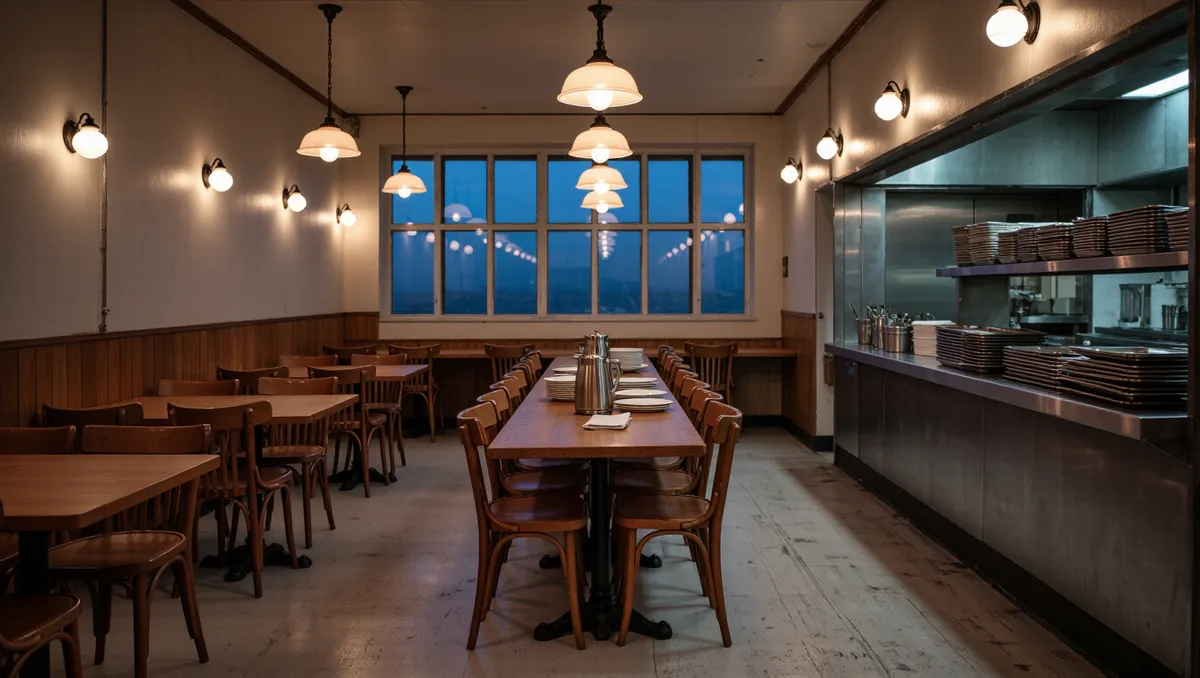
Every service in a New York kitchen starts with a meal nobody ordered. It is cooked before the prep, before the tickets, before the doors open. It is called staff meal, or family meal, and it is the one dish a chef makes for the people who will cook everything else that night. The answer to why it matters is simple: it is the kitchen's own dinner, and how a chef runs it says more about that chef than any plate on the menu.
Staff meal is usually a one-pot dish served family style, eaten standing or on quick breaks, often from the same pans it was cooked in. It runs on tight budgets and leftover odds and ends. Yet the ritual carries real weight. It sets the tone of the shift, feeds a crew that works long hours on its feet, and gives the newest dishwasher and the chef de cuisine a seat at the same table, even if that table is a steel counter.
Culture in a kitchen is built in small repeated moments, and this is the biggest one. The word itself is plain. Even Merriam-Webster traces "why" back to Old English, a question about cause and purpose that predates the language we speak now — and purpose is exactly what this meal is about. A kitchen that eats well together tends to work well together. A kitchen that skips it, or phones it in, feels the difference by mid-service.
Who actually cooks staff meal?
It depends on the kitchen, and that is part of what makes it revealing. In many New York rooms, staff meal is a junior cook's job. It is often the first task of the day, assigned to someone low on the ladder, sometimes a stage — the tryout cook working a shift to earn a job, which we explain in our piece on how New York kitchens run the tryout shift. Cooking staff meal is a test in miniature. Can you make something good from almost nothing? Can you feed thirty people on a budget that would barely cover two entrées? This connects to our earlier piece, The stage, explained: how New York kitchens run the tryout shift that decides who gets hired.
In other kitchens, the chef de cuisine or a sous-chef takes it on, especially in smaller rooms where the hierarchy is flat. Some chefs treat it as their one daily chance to cook freely, outside the menu. In a few famous cases, the top chef personally insists on running staff meal, because the message it sends — I cook for you first — is worth an hour of their day.
The setup varies too. Big kitchens with large crews often rotate the duty through the line, so everyone takes a turn. Small kitchens may fold it into prep, one cook handling both. What stays constant is the timing: it lands before service, when the room is quiet and the crew is about to be very busy.
What is actually in it?
The honest answer is: whatever needs using. Staff meal is the kitchen's waste-prevention engine. Trim from the butcher station, vegetable ends, yesterday's bread, odds from the walk-in — all of it becomes stew, fried rice, pasta, braises, frittatas. Cuisines built on thrift, from Italian cucina povera to Chinese home cooking, supply the playbook, because those traditions solved the same problem centuries ago: how to make something delicious from scraps.
That constraint shapes the dish. It has to scale, hold well, and satisfy hungry people doing physical work. So it leans toward starch and protein, toward braises and one-pot meals, toward food that tastes better the second day. Nobody expects refinement. What cooks expect is care — seasoning that is right, portions that are fair, something hot when the shift starts cold.
There is a practical logic underneath the sentiment. A fed line cooks better. A hungry line makes mistakes, snaps at each other, and cuts corners. Restaurants run on thin margins, and staff meal is one of the cheapest tools a chef has for keeping a crew steady through a double shift.
What does staff meal reveal about a chef?
Plenty. Watch how a chef handles staff meal and you learn how they handle everything else. A chef who insists on a proper sit-down meal for the crew, even on a Friday, is telling the room that people matter more than the clock. A chef who lets staff meal slide into a tub of rice and whatever's nearest is telling the room something too.
It also shows up in the food. Some chefs use staff meal to test ideas — a braise today might become a special next month. Others use it to teach, assigning a young cook a country's home cooking and asking them to research it and execute it. Others use it to honor the crew's own backgrounds, asking cooks to make the food they grew up eating. In a city as immigrant-built as New York, that can turn one meal into a tour of a dozen kitchens' worth of memory.
Our analysis: staff meal is the most honest food a restaurant produces. It has no customer to impress, no price point to hit, no photography to survive. It is cooked for an audience that knows exactly what good food tastes like and has no reason to flatter the cook. That makes it a purer expression of a chef's values than anything on the dining room menu — and a better predictor of how that chef treats the brigade that runs the pass, which we break down station by station in our explainer on who runs the pass.
What does it cost, and who pays for it?
Staff meal costs real money, and in a city with New York's rents and labor costs, every line item gets scrutiny. The food itself is usually drawn from inventory — trim, surplus, items approaching their use-by date — so its cash cost is lower than it looks, though not zero. The bigger cost is labor: someone's hour, or two, spent cooking a meal that generates no revenue. That is a real expense on a P&L, and it is one reason the ritual gets squeezed when a restaurant is struggling.
When money is tight, staff meal is often the first thing to degrade — smaller portions, fewer ingredients, less care. Cooks read that instantly. It is the same economics discussed in our piece on what it costs to put your name over the door in Manhattan: the business either budgets for its people or it doesn't, and the staff meal table is where that choice shows up daily, on a steel tray, in front of everyone. Readers following this should also see Chef-owner economics: what it actually costs to put your name over the door in Manhattan.
Some kitchens supplement with contributions from staff themselves — a cook brings a dish from home, the crew pools for a spread on a hard week. That informal version is not in any job description, but it is common, and it says something about how these rooms function as communities rather than just workplaces.
Why the ritual survives in a business that cuts everything else
Restaurants cut constantly — menus shrink, hours trim, positions merge. Staff meal survives because it does work nothing else does. It feeds the crew. It teaches thrift and speed to new cooks. It wastes less food. And it marks the boundary between the kitchen's private life and its public performance, a moment when the room belongs to the people who run it.
For readers who want to go deeper into the people behind the city's stoves, our chefs coverage follows the cooks, the careers, and the economics of New York kitchens — from the ladder up to the rooms they open. The staff meal will never make a menu or a review. But sit near a kitchen door at four in the afternoon, anywhere in Manhattan, and you will hear it: the quiet meal before the noise, the kitchen feeding its own.