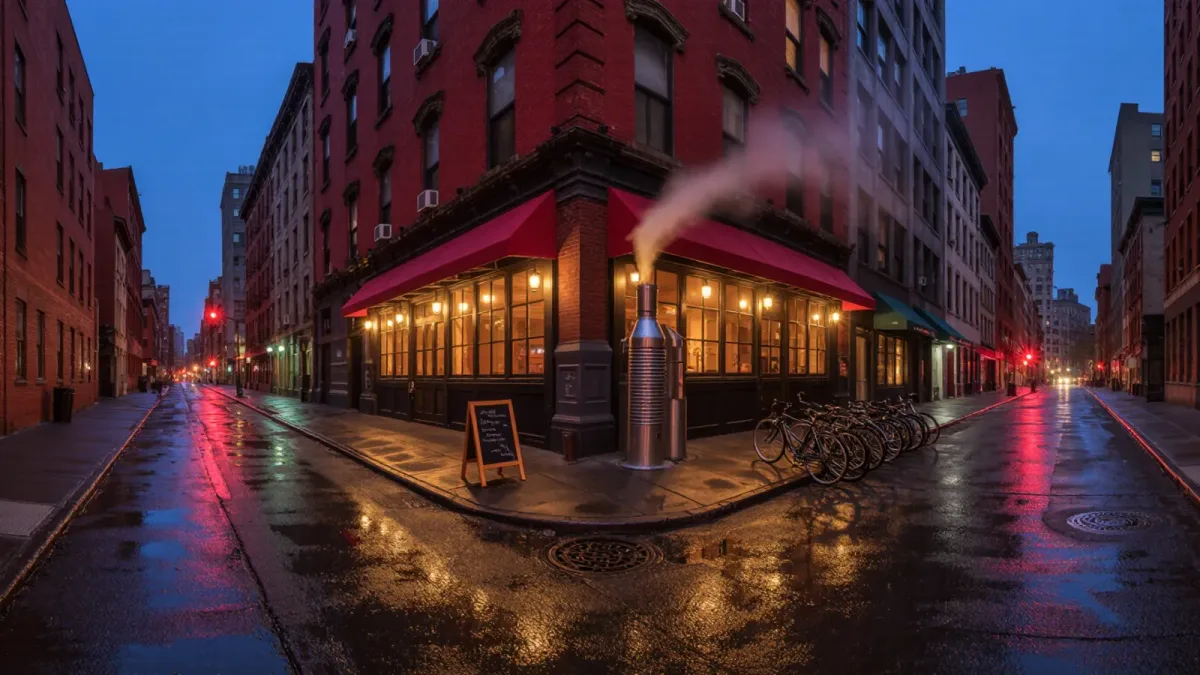
The block of Lexington Avenue between East 27th and East 33rd streets carries the nickname Curry Hill and the density to back it: one of the island's tightest clusters of Indian dining, anchored by the storied South Indian vegetarian kitchens and the regional rooms that followed them into the 20s and 30s. The corridor's format range is the widest of any ethnic food street in Manhattan — thali houses serving plated multi-dish meals, chaat counters, dosa kitchens, and upscale regional dining within a five-minute walk — and prices run from a $12 lunch thali to $75-plus tasting menus as of June 2026. This guide maps the corridor by format rather than by ranking, with the criteria stated: entries are long-operating rooms representative of their block as of June 2026.
Why is it called Curry Hill?
The nickname grew from the density: the block around Lexington Avenue in the high 20s and low 30s became the city's Indian dining center as the neighborhood's South Asian community and the restaurants that followed it clustered around the avenue in the late 20th century. The anchor institution is the corridor's foundational South Indian vegetarian cooking — the region's dosa and thali tradition that set the corridor's template — alongside the north-Indian brasseries that predate the regional wave. Murray Hill's office towers a block east supplied the lunch crowd that kept the rooms open through the decades, and the blocks now read as two economies: the power-lunch north end and the neighborhood south end.
The thali houses: the corridor's core format
The thali — a plated meal of small dishes over rice or breads — is Curry Hill's workhorse format, and the South Indian vegetarian kitchens on the Lexington Avenue blocks still run the definitive versions: a metal tray of sambar, rasam, vegetable curries, raita, and dessert, refilled until you stop, priced from roughly $12 at lunch. The rooms are quick, meat-free, and priced for the office trade, and the etiquette is simple: eat with the right hand or the provided spoon, ask for the day's specials, and do not skip the dessert course, which rotates by the kitchen's region. The thali houses' hours track the office day — slammed at 1 p.m., quiet by 3.
The dosa counters and chaat stops
The corridor's fast format is the dosa — the fermented rice-and-lentil crepe served fresh off the griddle — alongside the street-food repertoire of chaat: pani puri, bhel puri, and samosa chaat assembled to order at the counters. These are walk-in formats, $6 to $12 an item, and the honest quality signal is turnover: a counter moving dosas continuously serves better ones than a quiet kitchen, since the batter is at its best in the first hours after the griddle heats. Weekend evenings bring the neighborhood families; weekday middays belong to the badge crowd from the Murray Hill towers.
The regional and upscale tier
The last two decades added regional depth: Kerala, Hyderabad, Bengal, and the coastal south now appear on the corridor's menus, and the fine-dining rooms that followed price tasting menus in the $60-to-$90 band and dress the presentation for the occasion trade. This tier is where the corridor's evolution shows — the same Lexington Avenue blocks that built the thali lunch now support a reservation-based dinner market, and the smart play is to split the two: lunch at the thali houses, and the regional kitchens for an occasion. Wine service, rare on the corridor's casual end, appears at this tier.
Sweet counters and the chai break
The corridor's dessert format deserves its own stop: the mithai counters run trays of barfi, gulab jamun, and jalebi by weight, and the sweet shops pour chai in the afternoon lull between the lunch and dinner services. The etiquette is easy — point, weigh, and pay, cash preferred at the older counters — and the format doubles as the corridor's most honest quality index, because sweets move by weight to customers who eat them weekly. A working Curry Hill afternoon pairs a thali lunch with a sweet-counter stop on the walk out, an order of magnitude cheaper than any dessert menu in the neighborhood's dining rooms and closer to what the kitchens themselves eat.
Grocery, spice, and the walk between meals
The corridor's side streets hold the supply chain: spice shops and grocery stores on the crosstown blocks stock the corridor's kitchens and sell to the neighborhood at retail, from ghee to fresh curry leaves. The practical value for visitors is educational — the shelves name the ingredients on the menus, and the counter staff at the better shops will explain what to buy for a dish you just ate. The walk between the thali houses and the grocery strip is the corridor's best ten minutes, and it costs nothing but curiosity.
How to eat Curry Hill well
Three rules close the guide. Match format to hour: thali and dosa counters at midday, regional kitchens at dinner, chaat in between. Order the kitchen's region, not the generic list — the corridor's best rooms cook a specific place, and the menu's regional section is the room's whole thesis. And carry some cash, because the corridor's older counters remain cash-first, per posted notices, while the upscale tier runs cards throughout. The corridor is compact, fast, and format-driven — one of Manhattan's most complete food streets inside a ten-block walk.