Manhattan's Chinatown is a few blocks between Canal and the courthouses, but its menus hold 150 years of migration history. The neighborhood's food business began with Cantonese men — sailors, laborers, cigar makers — clustering around Mott and Pell Streets in the 1870s-1880s, and each subsequent wave of immigration has rewritten what the blocks cook.
What did the first Chinatown kitchens serve?
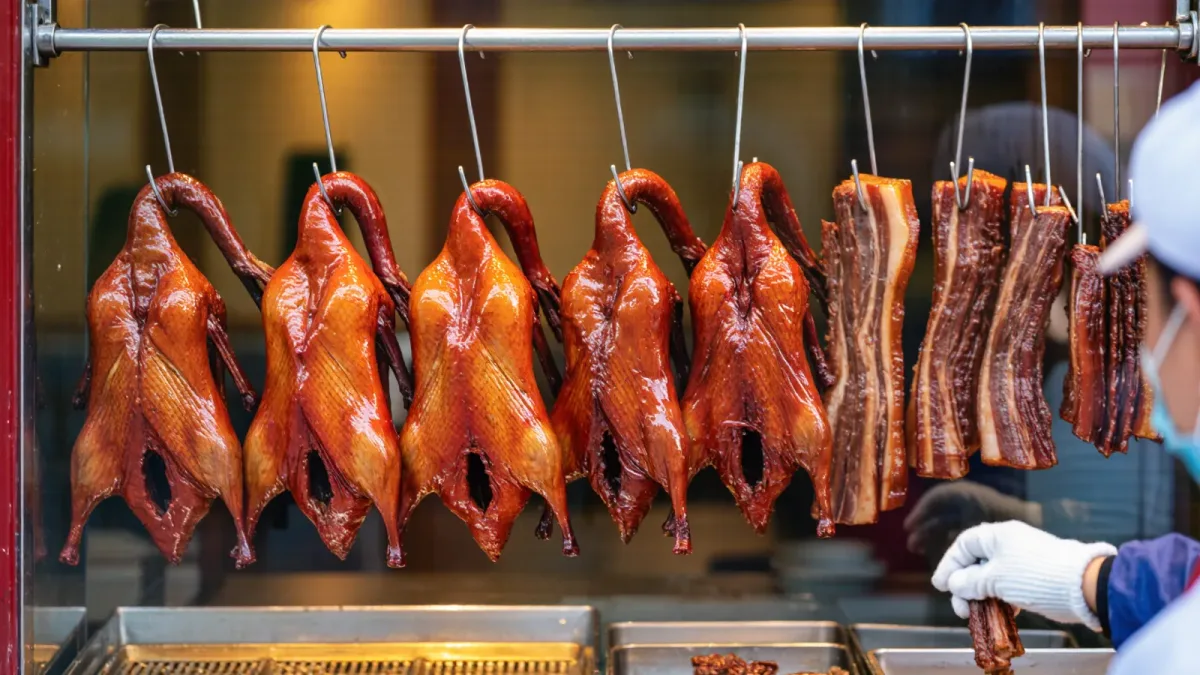
Early chop suey houses cooked a adapted Cantonese repertoire for mixed audiences — the dishes named in English that Americans mocked and loved in equal measure. Within the community, the food was Cantonese home cooking: rice plates, roasts, soups, and the Hong Kong-style cafe format that still anchors Mott Street's morning trade. The famous roast-meat windows — lacquered ducks and barbecued pork hanging in glass — came out of that Cantonese Canton-to-Hong Kong lineage.
How did the neighborhood's map shift?
Waves left their marks in geography. The Taishanese majority of the mid-century era fed the community through family associations' kitchens. Post-1965 immigration expanded the neighborhood east; Fujianese arrivals from the 1980s onward made East Broadway a distinct food street, with its own soup shops, buffet formats and regional noodle houses. Meanwhile the older core filled with Vietnamese, Thai, Burmese and Malaysian rooms reflecting later migrations through or from Southeast Asia — Chinatown as palimpsest, not museum.
What is Chinatown eating now?
The current layer is regional Chinese cooking at dining-room scale — Sichuan, Hunan, Dongbei and coastal Fujian rooms — alongside the bakeries, egg-waffle stands and bubble-tea lines that feed the weekend crowds. The pressures are the usual Manhattan ones: rent, rising wholesale costs, and the question of who inherits the storefronts. But the format that sustained the neighborhood since the 1870s — family-run, cash-visible, cooking one region's food honestly at working-people's prices — is still the neighborhood's engine. Read the block, and you read the migration.