Outdoor dining in Manhattan entered a new era in 2025: the pandemic's roadside sheds were retired and replaced by a permanent permitting system that keeps rebuilt sidewalk cafés on the curb while pushing roadway dining out of most of the island's residential streets. The result, as the season opens in May 2026, is a smaller but sturdier outdoor inventory — hundreds of permitted sidewalk cafés across Manhattan, per the city's posted permit listings, plus the courtyards, rear patios, and rooftop terraces that never depended on the curb. This guide maps the formats and the blocks where outdoor tables are worth booking, with the booking logic that matters more than any single address.
What changed about Manhattan outdoor dining?
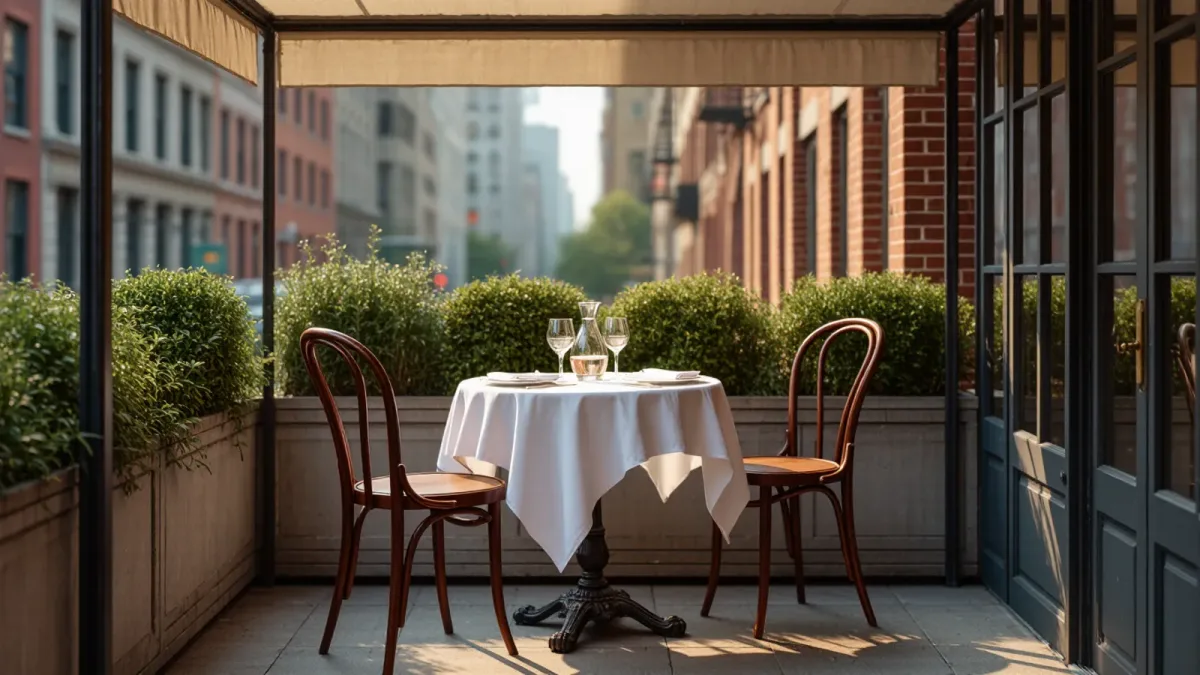
The city's permanent outdoor dining law, adopted after the pandemic program ended, allows two formats: sidewalk cafés on the curb, permitted and rebuilt to fixed design standards, and roadway cafés limited to the city's main commercial corridors rather than residential streets. Operators now pay annual fees and must remove enclosures in the colder months, so the spring opening — typically April and May — is when the rebuilt tables return. The practical consequence for diners: the random shed of 2021 is gone; what remains is engineered, permitted, and listed publicly, which makes outdoor tables both scarcer and more predictable than a few years ago.
Where are the classic sidewalk-café blocks?
Three zones carry Manhattan's densest permitted sidewalk tables. The European-style blocks of the West Village and the Meatpacking edges, where narrow curbside rooms open straight onto the street. Second Avenue on the Upper East and Upper West Sides, the avenue built for café rows and still carrying the island's longest runs of permitted tables. And the restaurant corridors of the Lower East Side and Chelsea, where the rebuilt sidewalk formats pair with rear patios behind the dining rooms. In all three, the tables fill first between 6:30 and 8:30 p.m. on warm weekends — book the outdoor section explicitly, because a reservation for the room is not a reservation for the curb.
Courtyards, gardens, and the hidden interiors
The island's best outdoor rooms are not on the street. The community-garden cafés of the East Village open seasonally; the courtyard formats behind Midtown's mid-century towers and inside the hotel blocks around Bryant Park serve from April; and the back patios of the old Italian and French kitchens around Sullivan and Jones streets turn into the city's most reliable warm-weather tables. These formats share one advantage over the curb: quiet. The rule for finding them is the back of the menu and the second question — any room with a garden lists it, and any host will say what is open before you sit.
Rooftops: the price of the view
The rooftop tier is its own economy: hotel roofs from the Lower East Side to Midtown price the skyline in the drinks, with cocktails routinely $20 and up and the season's tables booked out around holidays. Two working rules. Earlier is cheaper — the 4-to-6 p.m. window at the same roof runs the same drinks with a shorter bill and better light. And check what is above you: a roof with no open sky view is a bar with stairs, and Midtown has more of those than its rooftops admit.
The weather clauses and the winter question
Outdoor reservations come with fine print worth reading. Under the permanent rules, seasonal sidewalk cafés must come off the curb in the colder months, so a December booking labeled outdoor may actually mean a temporary enclosure, if the room offers one at all — and the quality of those enclosures varies from heated glass rooms to thin plastic afterthoughts. Rain policy is the other clause: many rooms will not re-seat an outdoor party indoors, because the indoor plan is already committed, so a forecast check is part of the booking. The honest hierarchy of Manhattan outdoor seating, priced the same in most rooms: courtyard beats sidewalk, sidewalk beats rooftop for dinner, and rooftop beats everything for a first drink at sunset.
Shade, street noise, and the sitting test
Two variables separate a pleasant outdoor table from a punishing one, and neither shows up in a listing. Shade: west-facing sidewalk tables in July sit in direct sun until nearly 7 p.m., so the summer regular books east-facing or awning-protected sections and lets the sunset drinkers have the glow. Noise: a table on a commercial avenue trades skyline energy for bus and truck traffic, which is why the side-street patios — on the crosstown streets off the avenues — have quietly become the locals' preference. When you arrive, apply the sitting test before ordering: if you would not sit there for two hours, ask for the next available table rather than inheriting the one nobody wanted.
How to actually get a good outdoor table
The booking mechanics have changed with the formats. Because permitted sidewalk sections are smaller than the old sheds, the outdoor inventory at popular rooms runs short — the working strategy is to request outdoor seating when booking and confirm it again by phone the day of, since sections close on weather and staffing. Early evening beats prime time: the 5:30 outdoor table gets the light, the warmth, and the empty curb before the 8 p.m. crowd fights for the same benches. And mind the season's edges — May and September-October are the months the rebuilt sidewalk cafés earn their permits, while the July-August heat pushes the smart tables to the shaded courtyards. The city's permit listings are public, per the permitting department's posted records, and they remain the only complete map of what is actually opening on the curb this season.