New York's restaurants do double duty as sets and symbols. The city's writers and filmmakers reach for a dining room when they want to say something about class, appetite, loneliness or ambition — which is why so many canonical scenes happen over a check.
Where did the tradition start?
In print. The Algonquin Round Table of the 1920s made a hotel dining room the setting of American literary celebrity — a daily lunch that produced a decade of quips and the template for the 'scene' restaurant. Decades of fiction followed: the Automat and the cafeteria as machines for solitude in mid-century stories and poems, the Luncheonette and the diner as democracy's booth, the super-club as ambition's stage in every Depression-era novel worth its salt.
Which restaurants became famous on screen?
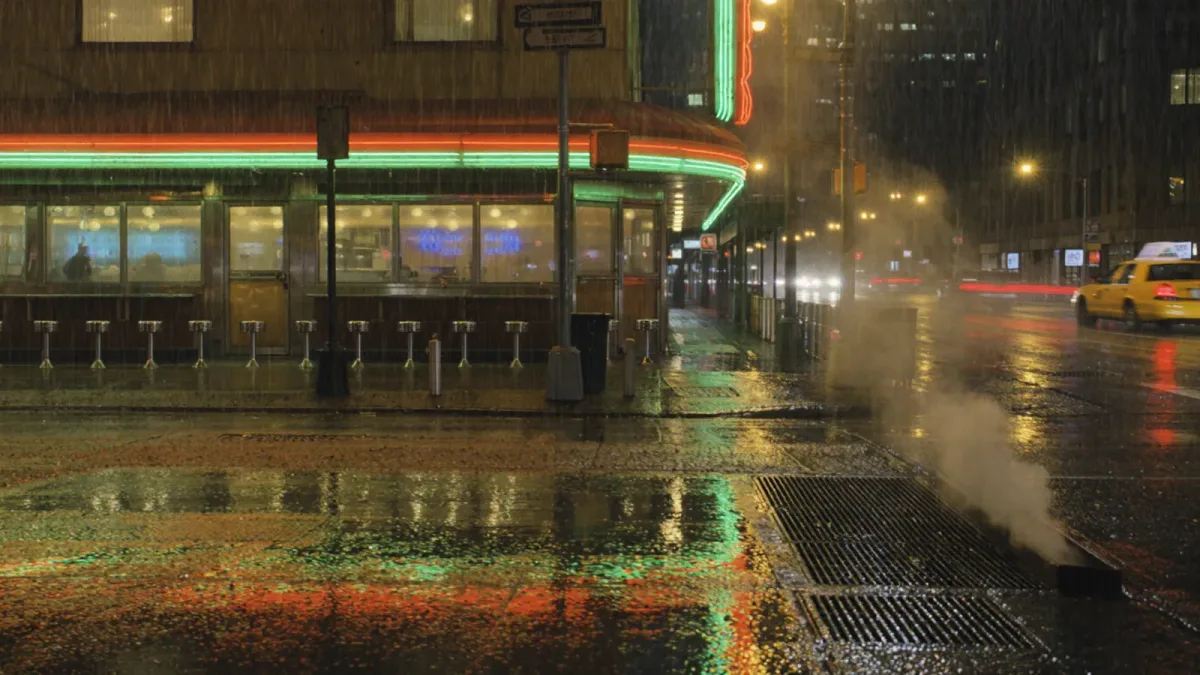
The movies made real rooms mythic: the anxiety of the Thanksgiving booth, the courting tables of the Upper East Side, Katz's-ordering-as-courtship recycled a Lower East Side institution into a global reference. Others invented rooms so vivid that visitors still ask for them — the Japanese-fusion tavern of mob operas, the French bistro of a hundred meet-cutes, the 3 a.m. diner of every subway-home ending. The pattern holds: in New York films, where the characters eat tells you everything about where they stand.
Why do restaurants carry the stories so well?
Because a restaurant compresses the city's themes into one room: strangers at close tables, money visible on every surface, service as social contract, and a menu that prices the neighborhood's own inequality. A writer needs a scene with a clock, a bill and witnesses — the restaurant supplies all three. The real rooms come and go with the lease cycle; the rooms in the stories stay open forever, one more way the fictional New York outlives the actual one.