The bagel reached New York with Eastern European Jewish immigrants in the late 1800s — a dense, boiled-then-baked ring sold in Yiddish-speaking delis and bakeries on the Lower East Side. For its first half-century in America it stayed a neighborhood bread, unknown outside New York's Jewish enclaves. Its road to citywide — then national — domination ran through a union local and a machine.
What did the bagel union do?
Bagel baking was a closed craft: Local 338, the bagel bakers' union founded on the Lower East Side in the early 1900s, controlled the hand-rolled recipe, the hours and the trade so tightly that the term 'bagel' itself was effectively a licensed product of one community's skill. That monopoly kept quality high and prices stable — and kept production small, until the invention and spread of the bagel machine in the 1950s-1960s broke the craft bottleneck and let the bread scale beyond the neighborhood.
Why is the New York bagel supposed to be better?
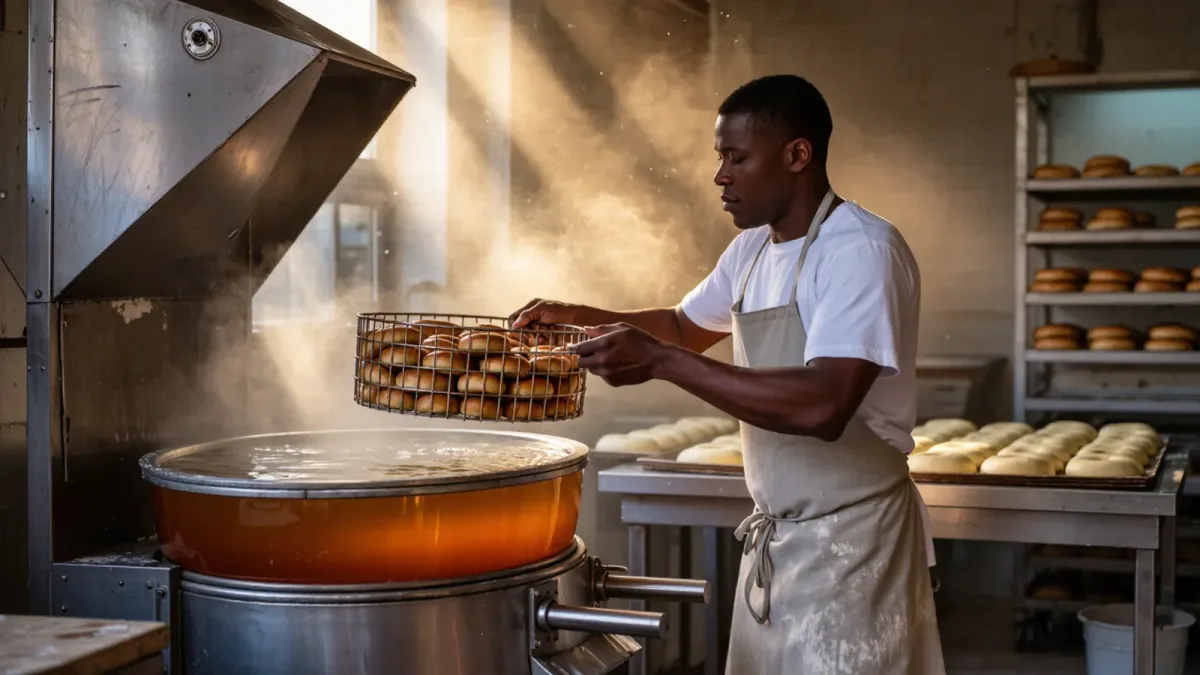
The folklore credits the city's water; the craft credits the process — a slow, cold fermentation, a firm high-gluten dough, the boil that sets the glossy crust before the bake. Every element was settled in those early delis, which is why the city's best bagel counters still describe their method in the same terms their predecessors would recognize: kettle-boiled, hand-finished, baked in the same building where they are sold.
What has changed on the counter?
The toppings diversified with the city: lox-and-cream-cheese as the mid-century classic, then tofu spreads, rainbow everything, and the wood-fired and sourdough revivals of the last decade. What has not changed is the bread's role — the cheapest way to eat well at 8 a.m. in Manhattan, assembled in front of you by hand, wrapped in paper, eaten standing up. A century in, the bagel remains the city's most efficient breakfast, union-made in spirit if not in card.