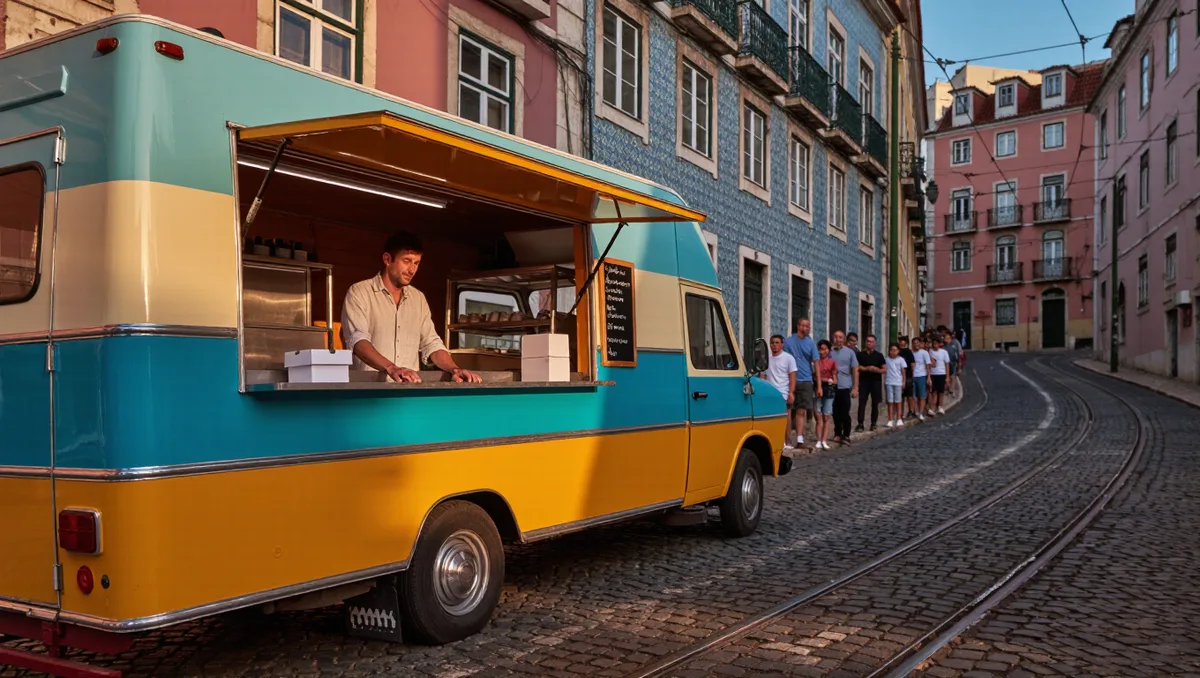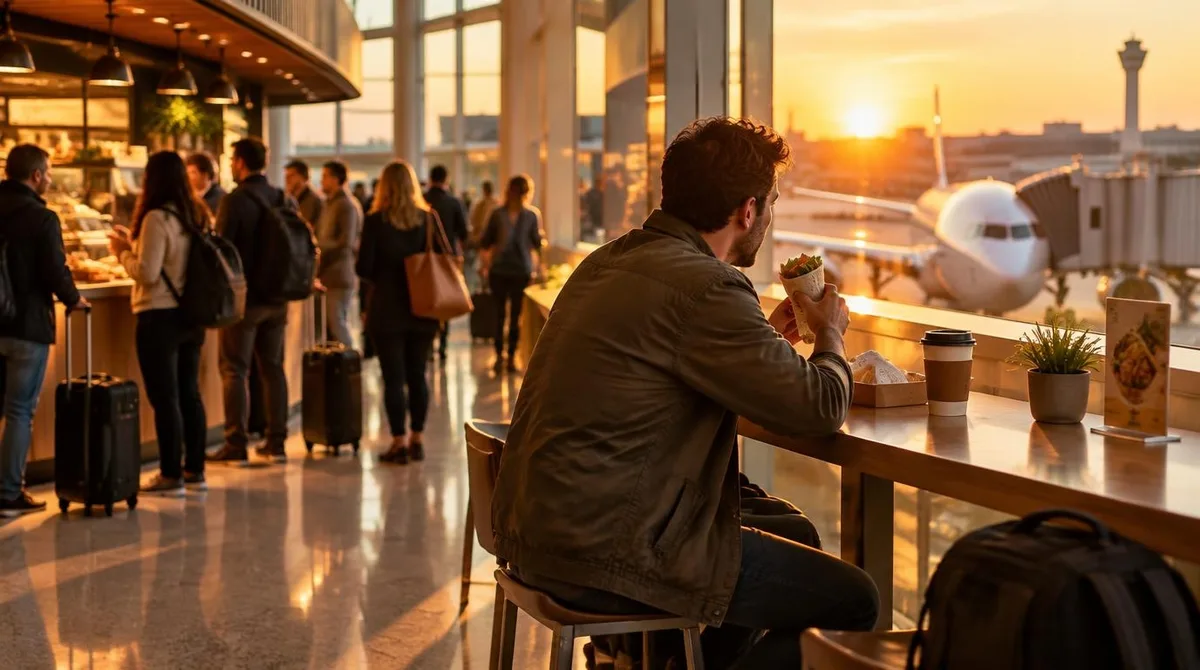
That chicken caesar wrap by Gate B costs more than the same wrap two miles from the terminal, and the reason is not that the kitchen is better. It is that the kitchen has no competition, a lease bill most street-level restaurants would faint over, and a customer who cannot walk away. Airport food prices run high because every cost that makes a restaurant expensive gets amplified inside a secure concourse.
The good news: the markup is predictable, and predictable means avoidable. A traveler who understands why terminal dining costs what it costs can eat nearly as well and spend noticeably less, without resorting to vending machines. Here is the economics, and the counter moves.
Why does food inside an airport cost more?
Three forces stack. First, rent. Concession space in a terminal is scarce, and airports auction it to operators willing to bid a percentage of sales on top of base rent. That percentage can be far steeper than the rent a neighborhood restaurant pays, and it flows straight into menu prices. Second, labor and logistics. Every delivery truck passes a security checkpoint. Every case of lettuce takes longer to move, and slower logistics cost money. Third, hours. Terminal restaurants run early flights through late arrivals, seven days a week, which means more shifts and more overtime than a diner that closes at 3 p.m.
Then there is the customer. Once you are through security, you cannot comparison shop. Operators know this. Economists call it a captive market, and it is the quiet reason a bottle of water can cost several times its street price. Some airports have moved to cap prices at street-level levels, but coverage is uneven, and caps tend to apply to a defined list of items rather than the whole menu.
What you are actually paying for
Think of the markup as buying convenience, not food. The convenience is real: a hot meal in forty minutes, steps from your gate, no taxi, no re-clearing security. On a tight connection, that can be worth it. The mistake is paying the convenience premium when you do not need it, on a two-hour layover with time to spare.
Scale matters too. Big hubs offer real choice, including outposts of respected city restaurants and markets selling grab-and-go items at closer-to-retail prices. Small fields offer almost nothing. As a useful illustration, the aviation directory AirNav lists Sawyer County Airport in Hayward, Wisconsin, a small public-use field, with fuel, hangar parking and weather services among its amenities and no food or concession service at all. That is the bottom of the spectrum: at many small airports, the honest answer is to eat before you arrive or bring food with you.
How to choose where to eat in a terminal
Walk the concourse before you commit. Prices for the same category of food, a sandwich, a slice, a coffee, can differ meaningfully between a branded grab-and-go market and a sit-down place fifty feet away. A few patterns hold across most terminals:
- Grab-and-go markets usually beat sit-down restaurants on price for the same basic items, and you can read the labels before buying.
- Breakfast is the cheapest meal to buy airside. Egg sandwiches and oatmeal carry smaller markups than dinner entrees.
- Splitting works. Two travelers sharing one sit-down entree plus a market item often eat better than either would alone at the same total spend.
- Bars are the worst value for food. A pub plate priced like an entree is usually the smallest, most marked-up thing on the menu.
Menu logic is a tell, the same way it is on the street. A terminal restaurant whose menu leans on fried appetizers and bottled sodas is pricing for the captive crowd. One that runs a real kitchen with cooked-to-order plates is competing for your attention, and its prices tend to be closer to honest.
Practical steps before you fly
Most savings happen before security, not after. Eat a real meal at your origin, in the city, at street prices, before heading to the airport. Check the terminal map online while you book; many airport websites list every concession with its concourse, so you can plan around a long walk or a short connection. If your home airport allows outside food through security, solid food generally clears fine, while liquids over the standard limit do not, so a wrapped sandwich travels better than a yogurt. Readers following this should also see Spring 2026 in New York: the openings visitors should plan a dinner around.
For the arrival side, the same logic applies in reverse. If you land hungry in a city you are about to explore, the first good meal should rarely be the one sold forty feet from baggage claim. Our food travel guide: how to plan a food-focused city break covers how to sequence an eating day in a new city, and the same discipline applies to the airport bookend of the trip.
What this means for your next layover
Our analysis: treat terminal dining as a service with a surcharge, and decide consciously whether the surcharge is worth it today. Long connection, late-night arrival, traveling with kids? Pay it, choose the place with the real kitchen, and enjoy it. Two-hour layover at 11 a.m.? Eat before security, carry something solid, and spend the terminal money on coffee only.
The airport restaurant business is evolving, with more cities installing genuine local operators airside, and competition slowly improving both quality and price. Until it reaches every concourse, the traveler who reads the menu logic, walks the concourse once, and times the big meal for street level will eat better than the one who pays the gate premium by default. For more coverage of how travel and dining economics intersect, see our Travel News section, including why Times Square restaurants price the way they do, where the same captive-audience math plays out on the ground.